
 EN
EN


-
{{ CAT. NAME }}
{{ FILTERS.VARIANTS.TYPE1_NAME }}
{{ FILTERS.VARIANTS.TYPE2_NAME }}
Brand
Model
{{ FILTER.NAME }}
Price
Types of Shields for Arduino
Shield models for Arduino are expansion boards used to add features such as motor control, Ethernet connection, LCD display, sensor expansion, relay control, prototyping, and different communication functions to development boards. You can compare shield options compatible with Arduino at Robotistan according to your project’s purpose, board compatibility, connection type, and technical requirements.
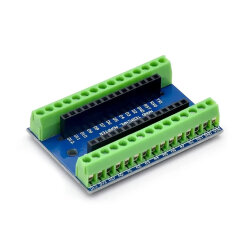
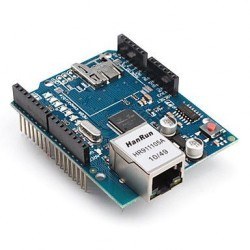
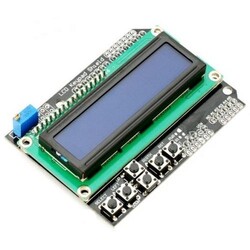
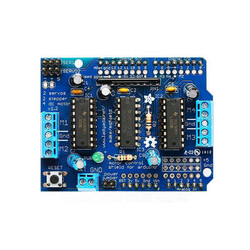
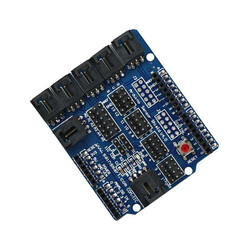
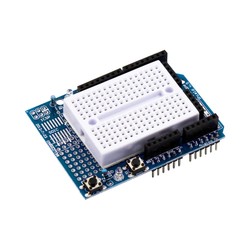
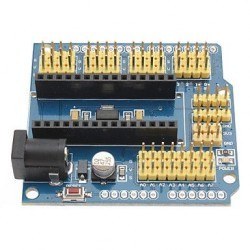
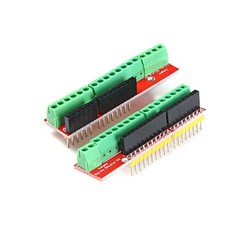
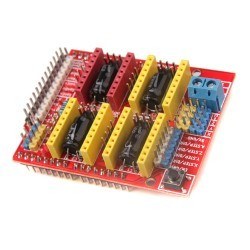
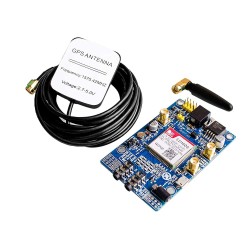
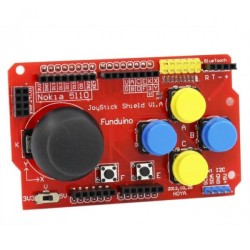
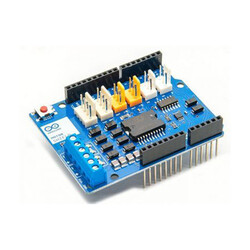
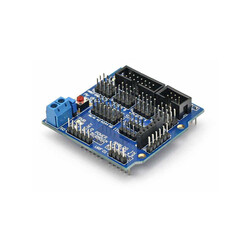
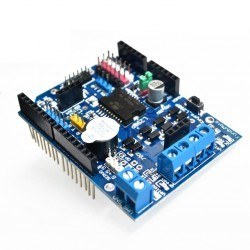
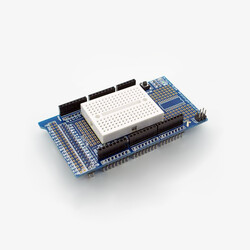
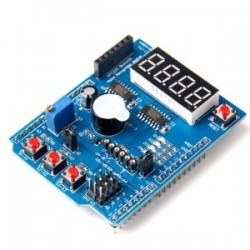
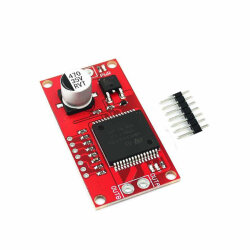
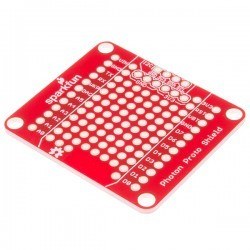

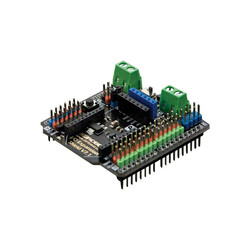
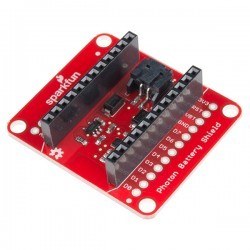
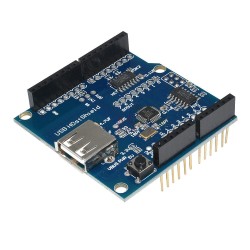
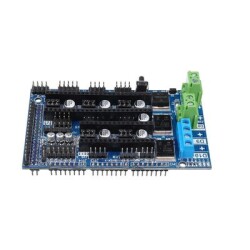
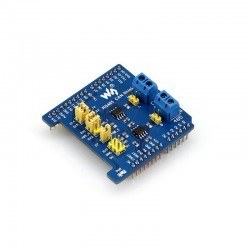
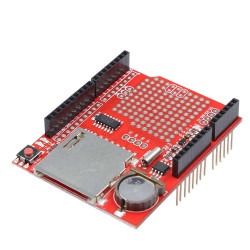
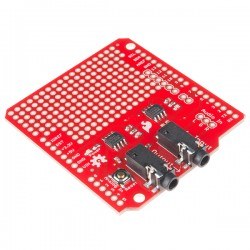
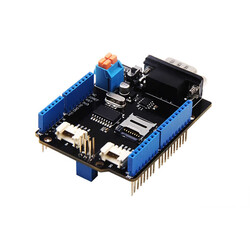
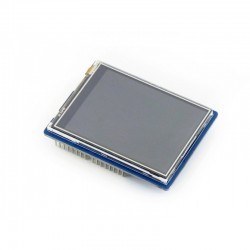
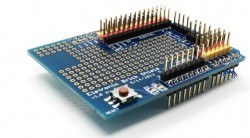
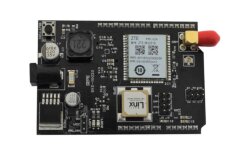
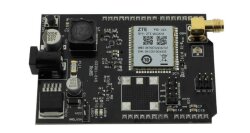
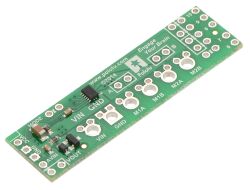
Shields for Arduino
A shield for Arduino is an expansion board that is mounted on development boards based on Arduino and original Arduino® boards to add new features to the board.
With shield boards, motor control, Ethernet connection, LCD display use, sensor connection, relay control, prototyping, data collection, and different communication applications can be carried out more practically.
In projects based on Arduino, setting up every connection one by one with jumper cables can take time.
Connection complexity increases especially in projects that use multiple sensors, motors, displays, or communication modules.
Shield models for Arduino are used to reduce this complexity and make the project more organized.
The shield structure, which is mounted directly on the board, provides great convenience for both beginners and experienced users who want to develop prototypes quickly.
When determining which shield model your project needs, board compatibility, pin structure, operating voltage, communication protocol, and the components to be used should definitely be considered.
Shields for Arduino are generally designed to be compatible with a standard-size Arduino® board and can be stacked on top of each other.
This allows you to use multiple shields in your projects and increases expansion options.
At the same time, shields for Arduino are designed for many different purposes.
For example, motor driver shields can be used to control motors in robotics projects.
Ethernet shields can be preferred to provide internet connectivity.
Sensor shields can be a suitable choice when you need to use multiple sensors in your project.
Using a shield for Arduino is quite easy. They can be attached to your Arduino® board with simple connection methods.
In the Arduino® development environment, you can use shield features by installing the appropriate libraries according to the type of shield used.
Shields for Arduino provide flexibility while developing your projects and reduce the need to add some components manually in more complex projects.
Since there are many different types of shields for Arduino, it is important to research which shield model you should use for your project.
What Does a Shield for Arduino Do?
A shield for Arduino is an external expansion board used to extend the features of your Arduino® boards and provide more functionality in your projects.
By using a shield for Arduino, you can expand your project and reduce the time and effort required to add different components.
Because shield products can be easily attached and removed, making changes to your project or reusing components also becomes easier.
Another advantage of using a shield for Arduino is that it helps organize the use of I/O pins on your Arduino® board and can increase connection capacity in some projects.
This allows you to connect more sensors or different components more easily.
As a result, using a shield for Arduino is a practical option for increasing the functionality of your projects and adding more flexibility to complex applications.
Types of Shields for Arduino
Shield types for Arduino are designed for many different purposes, and product variety continues to increase.
Below are some popular shield types that can be used with Arduino®:
- Ethernet Shield for Arduino: Used to connect your Arduino® board to the internet.
- Motor Driver Shield for Arduino: Used for motor control.
- Sensor Shield for Arduino: Allows multiple sensors to be connected.
- Display Shield for Arduino: Used to show data on a display.
- WiFi Shield for Arduino: Provides wireless connectivity.
- Bluetooth Shield for Arduino: Provides Bluetooth communication.
- GPS Shield for Arduino: Used to obtain GPS location data.
- SD Card Shield for Arduino: Used for data storage.
- NFC Shield for Arduino: Transfers data with NFC technology.
The list above includes only a few examples.
Different shield types are available for different projects, and these products can be selected according to project requirements.
Shield Selection and Comparison Guide
You can use the reference table below to choose the right expansion board for your project:
| Shield Type | Main Chip / Component | Ideal Project Use | Key UX Feature |
| L293D Motor Driver | L293D IC | Robotic vehicles, robot arms | Easy connection for 4 DC motors or 2 stepper motors |
| Ethernet Expansion | W5100 / W5500 | Server setup, smart home | Built-in MicroSD card slot for data logging |
| CNC Expansion V3 | Compatible with A4988 / DRV8825 | 3D printer, laser engraving | Ability to control 4-axis stepper motors |
| LCD Keypad Shield | 16x2 character LCD | Menu control panels | Solderless display and keypad setup |
If you want to get all hardware parts together with compatibility advantages, you can review our Kits Based on Arduino category.
All these products can be used mechanically and software-wise with the Boards and Accessories Based on Arduino available on our website.
Frequently Asked Questions
Can multiple shields be stacked on top of each other?
Yes. One of the biggest advantages of these boards is that they have stackable long pin structures. However, the important point to consider is that the shields you stack should not use the same communication pins in conflict with each other, such as SPI pins D11, D12, and D13.
Do I need to install an extra library to use a shield?
Most of the time, yes. Since expansion boards contain different chips, you may need to install the library for the relevant chip in the Arduino IDE. For example, AFMotor.h can be used for an L293D motor driver, and Ethernet.h can be used for Ethernet. You can find the related library links in the documents tab of Robotistan product pages.
Can I use shields with development boards based on or compatible with Arduino?
Yes, you can. As long as the electronic pin layout and header structure are standard, original Arduino® boards as well as development boards based on or compatible with Arduino can be used physically and electrically with shield products.