
 EN
EN


-
{{ CAT. NAME }}
{{ FILTERS.VARIANTS.TYPE1_NAME }}
{{ FILTERS.VARIANTS.TYPE2_NAME }}
Brand
Model
{{ FILTER.NAME }}
Price
RISC-V Development Boards and Models
Discover Tang Nano, AiPi, and many other models at Robotistan to bring your open-architecture microcontroller, FPGA, IoT, and embedded system projects to life with RISC-V development boards.
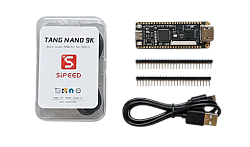
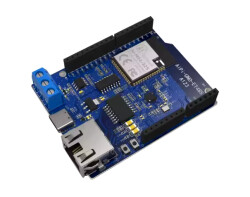
What Are RISC-V Development Boards?
RISC-V development boards are boards used to develop embedded system, microcontroller, FPGA, IoT, and prototyping projects through RISC-V-based processors or hardware related to the RISC-V ecosystem, which is an open instruction set architecture.
RISC-V offers an open processor architecture approach developed independently of a specific brand.
These boards can be considered by users who want to:
- Learn next-generation processor architectures,
- Experience the open hardware ecosystem,
- Develop embedded software,
- Build sensor and communication applications,
- Experiment with processor design on FPGA,
- Develop industrial communication projects.
The RISC-V development boards category at Robotistan brings together FPGA/RISC-V-focused boards such as Tang Nano 9K, communication-focused development solutions such as AiPi-UNO-ET485, and products that users interested in working with the RISC-V architecture can evaluate. When choosing the right board, the actual processor structure, FPGA support, SDK and software environment, programming method, connection interfaces, and project goal should be evaluated together.
What Is RISC-V Architecture Used For?
RISC-V is an open instruction set architecture that defines which instructions processors run and how they execute them.
Users and manufacturers can build processor solutions with different performance levels, power consumption characteristics, and application areas based on this architecture.
This structure provides an important field especially for academic studies, open hardware projects, embedded system development, and learning processor architecture.
RISC-V development boards allow users to gain practical experience with this architecture.
RISC-V-based projects can be developed at different levels, from simple input/output applications to industrial communication projects, from processor experiments on FPGA to IoT devices.
The RISC-V ecosystem is a newer and still-developing field compared to more common architectures such as ARM or AVR.
For this reason, RISC-V boards are an interesting option for users who want to experience new technologies, learn open-architecture systems, and gain early familiarity with processor platforms that may be used more widely in the future.
What Can You Do with RISC-V Boards?
The RISC-V ecosystem focuses on specific R&D studies.
1. Designing Your Own Processor: FPGA Integration
Models such as Tang Nano 9K are among powerful FPGA Development Boards that contain a Gowin chip.
The biggest feature of these boards is that they allow you to synthesize and test your own RISC-V core, or soft-core structure, at the hardware level using VHDL/Verilog.
This means you do not only write code; you can also experience the process of physically designing your own microprocessor.
2. High-Security and Low-Power IoT Devices
If you are developing smart agriculture, medical devices, or smart home systems where data privacy is critical, affordable RISC-V boards produced by brands such as Sipeed offer a strong option in terms of low power consumption, long battery life, and transparent hardware security.
Architecture Comparison: RISC-V vs ARM vs AVR
You can review the summary table below to decide which architecture is suitable for your project:
| Architecture Type | License Status | Key Feature / UX Difference | Most Suitable Area |
| RISC-V | Fully open source | Transparency, ability to add custom instructions | Custom chip design, IC design, education |
| ARM, 32-bit | Closed, licensed | Massive industry-standard ecosystem | High-performance automation, IoT |
| AVR, 8-bit | Closed, licensed | Extremely common, rich library support | Rapid prototyping, hobby electronics |
Frequently Asked Questions
Can I program RISC-V boards with the Arduino IDE?
Yes. Although RISC-V is a complex architecture, ready-made microcontroller boards in our category, such as Sipeed, Longan Nano, and similar models, have special board packages that can be integrated into the Arduino IDE. This allows you to develop projects with C/C++ just like coding a standard board.
Should I choose RISC-V or ARM?
If your goal is to build a commercial product that will be launched quickly, ARM, such as STM32, is still a safe option with its ready-made libraries and wide range of resources. However, if your goal is to learn computer architecture from the ground up, move away from licensing restrictions, or become a chip design engineer sought after in the future processor market, RISC-V development boards can be a strong starting point.
Is the Tang Nano series FPGA or RISC-V?
The Tang Nano series is basically an FPGA development board. However, it has been optimized by the manufacturer to run open-source RISC-V cores such as PicoRV32 internally. In other words, with these boards, you can either design only logic gates or load a RISC-V core into the board and use it like a microcontroller.