
 EN
EN


PIC Development Boards and Programmers
Design your systems safely with Microchip-based PIC development boards and hardware programmers (ICSP), known for their stability in industrial projects.
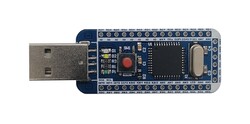
The Symbol of Industrial Stability: PIC Microcontrollers
PIC (Peripheral Interface Controller) microcontrollers, produced by Microchip Technology, are among the most established and trusted hardware architectures in the electronics world and the industry.
Unlike modern boards that are popular in hobby electronics today, one of the biggest advantages of PIC chips is their high tolerance to electrical noise and the maximum stability they provide under harsh physical conditions such as temperature and magnetic fields.
Thanks to these features, they are still used as an industry standard in the automotive sector, white goods control boards, elevator systems, and heavy industrial automation.
Which Hardware Do You Need for PIC Projects?
When getting started with the PIC architecture, unlike standard plug-and-play boards, you need two main hardware groups:
1. System Development and Experiment Boards
To run a bare PIC integrated circuit, you need to connect external components such as a crystal oscillator, capacitors, and voltage regulators.
PIC development boards provide the basic circuit components ready on the PCB, saving you from complex wiring and allowing you to move directly to coding.
2. PIC Programmer Devices
While most modern open-source boards accept code directly over USB, you cannot write code directly via USB to most PIC microcontrollers unless a special bootloader has been installed.
To transfer the HEX code you write to the chip, you need hardware programmers that work between your computer and the chip using the ICSP (In-Circuit Serial Programming) protocol, such as PICKit 3, PICKit 4, or universal programmers.
Architecture Comparison Guide: PIC or Modern Alternatives?
You can compare the PIC series with today's popular open-source hardware to make the right decision for your project:
| Architecture / Hardware | Programming Language / IDE | Advantage | Difficulty Level / Target |
| Microchip PIC | C, Assembly, MPLAB X, CCS C | Industrial durability, low-cost production | Advanced level, engineering and industry |
| ARM Cortex (STM32) | C/C++, STM32CubeIDE | High clock speed, complex processing power | Advanced level, advanced R&D |
| Open Source (AVR etc.) | C++, Arduino IDE | Wide library support, plug-and-play convenience | Beginner / intermediate level, rapid prototyping |
Electronics Design Ecosystem with Robotistan
Programming PIC requires a full understanding of the hardware architecture at the register level. While our competitors only sell chips or boards, we at Robotistan support every stage of your project.
If you will use a bare chip directly, such as a DIP package, instead of a development board, you can get the components you need to test these chips, such as breadboards, jumper cables, and oscillators, from our Prototyping / Soldering category.
If the learning curve of PIC architecture feels too steep and you want to bring your project to life much faster with broad library support, you can review modern and easy prototyping alternatives in our Development Boards Based on Arduino category, which is more suitable for the maker approach rather than strict industrial standards.
Frequently Asked Questions
Which programs can I use to code PIC microcontrollers?
The most preferred official software in the industry is Microchip's free MPLAB X IDE and XC8/XC16/XC32 compilers. In addition, third-party compilers that are easier to learn, such as CCS C and mikroC PRO, are also frequently used in educational institutions and among hobbyists.
Can I upload my Arduino code to PIC boards?
No, you cannot upload it directly. The chip architectures, memory structures, and compilers of the two systems are different. However, you can rewrite the basic algorithm, or logic, of your C/C++-based code by adapting it to the syntax of PIC compilers such as XC8.
Can I upload code to a bare PIC chip without a development board?
Yes. If you have a hardware programmer such as PICKit, you can place the chip on a breadboard and write code directly into the chip by correctly wiring the ICSP pins, namely MCLR, VDD, VSS, PGD, and PGC.