
 EN
EN


-
{{ CAT. NAME }}
{{ FILTERS.VARIANTS.TYPE1_NAME }}
{{ FILTERS.VARIANTS.TYPE2_NAME }}
Brand
Model
{{ FILTER.NAME }}
Price
NodeMCU and ESP Development Boards
Discover affordable ESP8266- and ESP32-based NodeMCU boards with built-in Wi-Fi and Bluetooth features for your Internet of Things (IoT) projects, with Robotistan assurance
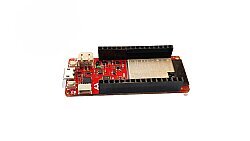
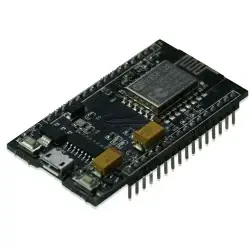
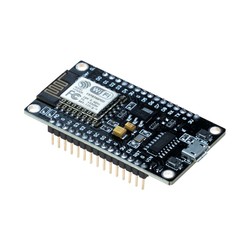
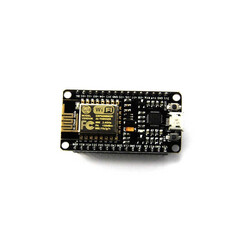
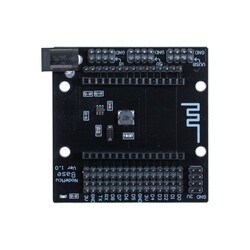
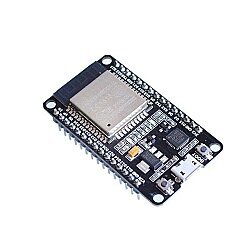
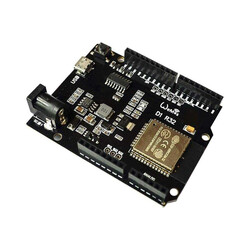

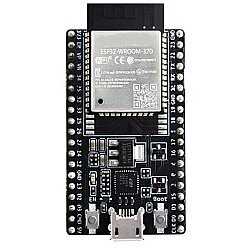
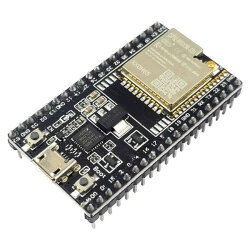
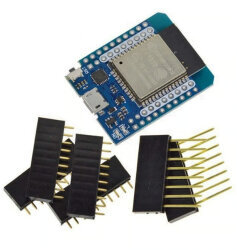
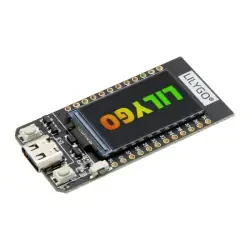
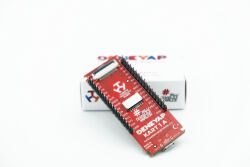
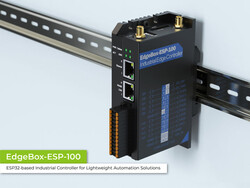
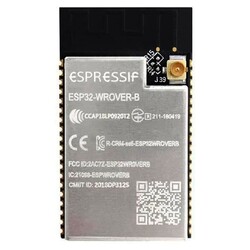

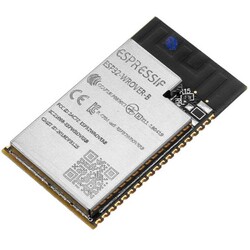
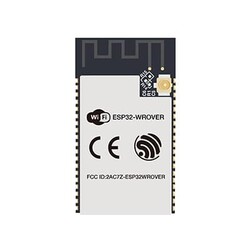

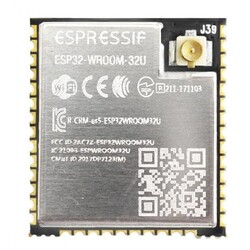
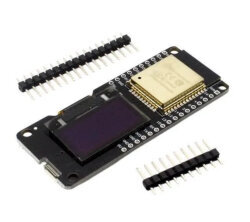
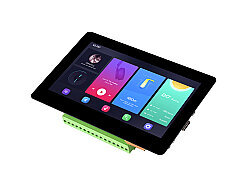
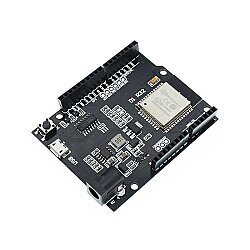
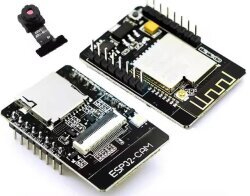
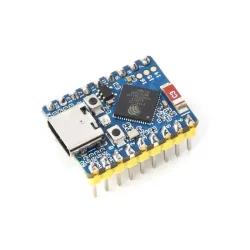
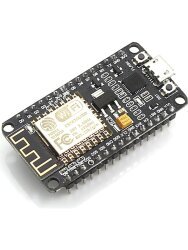

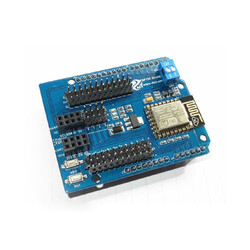
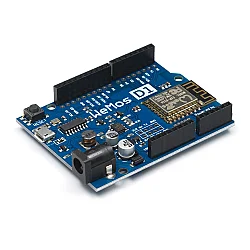
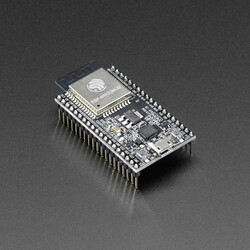
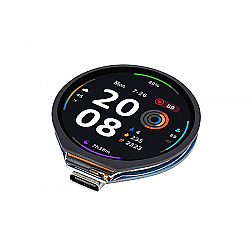
NodeMCU / ESP: Powerful Solutions for the Internet of Things
NodeMCU is an open-source platform based on the ESP8266 Wi-Fi module, offering developers an easy way to add internet connectivity.
ESP8266 is a low-cost, low-power microcontroller with Wi-Fi capabilities.
NodeMCU can be considered a development board built around this module.
The NodeMCU board includes many features and resources that make it easier to program the microcontroller and manage Wi-Fi connectivity.
It can be programmed with different development tools such as the Arduino® IDE or the Lua programming language.
Thanks to Wi-Fi connectivity, many applications such as IoT projects, remote sensor monitoring, and control projects can be developed.
NodeMCU is a popular option especially in areas such as hobby electronics, IoT projects, smart home automation, and sensor-based applications.
Users can use the NodeMCU platform to remotely control their devices over Wi-Fi or connect them to the internet.
The Relationship Between NodeMCU and ESP8266
NodeMCU and ESP8266 are popular development platforms used for IoT applications and other internet-connected projects.
ESP8266 is essentially a Wi-Fi microcontroller module, while NodeMCU is a development board that makes this module easier to program and use.
ESP8266 Microcontroller Module
ESP8266 stands out with its low cost and low power consumption. Thanks to its built-in Wi-Fi capabilities, it can connect to the internet and exchange data.
With its GPIO pins, it can communicate with other devices.
ESP8266 is used in many different areas, especially IoT projects, from sensor-based applications to smart home automation.
NodeMCU Development Board
NodeMCU is a development board that makes the ESP8266 module easier to use.
The NodeMCU board is mounted on a PCB that contains the ESP8266 module.
This board includes the interfaces and components required to program the ESP8266 and manage Wi-Fi connectivity.
It can usually be programmed with development tools such as the Lua programming language or the Arduino IDE.
NodeMCU allows you to use the potential of ESP8266 more easily.
The connectors and pins on the board help you create projects faster and more easily.
At the same time, thanks to Wi-Fi connectivity, you can integrate internet access and remote control capabilities into your projects.
As a result, NodeMCU and ESP8266 offer a powerful and user-friendly combination for those who want to develop internet-connected projects.
While the ESP8266 microcontroller module enables devices to connect to the internet with its Wi-Fi capabilities, the NodeMCU development board provides an interface designed to help you program the module more easily and use it in your projects.
This allows you to create creative solutions in many different areas, from IoT projects to smart home automation.
ESP8266 and ESP32 Comparison
You can compare the two main chip families in the table below to find the model that best fits your needs:
| Feature | ESP8266: NodeMCU etc. | ESP32 |
| Processor Core | Single core | Dual core |
| Wireless Connectivity | Wi-Fi only | Wi-Fi + Bluetooth Classic and BLE |
| Ideal Use Case | Basic IoT, sensor reading, smart home | Advanced IoT, audio/video transmission |
| Pin Count and ADC | Limited pin count, single ADC | Many pins, advanced ADC/DAC |
NodeMCU ESP8266 Example Projects
- Smart home automation: NodeMCU allows you to connect devices such as lighting, thermostats, and security cameras in your home to the internet and control them remotely.
- Weather station: You can measure temperature, humidity, and pressure data using DHT11 or DHT22 sensors and send this data to the internet.
- Remote-controlled robot: You can build a robot with NodeMCU and control it remotely via Wi-Fi.
- Smart irrigation system: You can monitor the water needs of your plants with soil moisture sensors and control the irrigation system automatically.
- Home security system: You can create a system that secures your home using PIR sensors and camera modules, and receive notifications when motion is detected.
- Smart plug control: You can create smart plugs with NodeMCU and turn electronic devices in your home on and off remotely.
- Smart farm: You can monitor agricultural areas with soil moisture, light, and temperature sensors, collect data, and manage irrigation systems.
- Voice control for home automation: You can combine NodeMCU with a microphone and speaker to control devices in your home with voice commands.
- Remote temperature monitoring: You can measure the temperature of an object with sensors such as DHT11 or DS18B20 and monitor temperature data by connecting to the internet.
- Smart light control: You can measure ambient light with LDR sensors and automatically control lighting with NodeMCU.
These are only a few examples to get started. With the NodeMCU ESP8266 platform, you can use your imagination to build many different projects.
Frequently Asked Questions
Can I code NodeMCU boards with the Arduino® IDE?
Yes, you can. Although the boards come from the factory with the Lua scripting language, also known as NodeMCU firmware, you can easily program both ESP8266 and ESP32 boards with standard C/C++ languages by installing the relevant Board Manager packages in the Arduino® IDE. These hardware products also support MicroPython.
Do I need to buy an external Wi-Fi antenna for ESP modules?
Most development boards similar to NodeMCU and Wemos include a built-in PCB antenna. These antennas are usually sufficient for communicating with a modem in standard home and office use. However, for special projects that require long range, such as a sensor application in a field, you should choose modules with an IPEX / U.FL external antenna socket and purchase an antenna separately.
Can I connect 5V sensors to the boards?
You can power boards with Micro-USB or Type-C inputs, such as NodeMCU, with 5V over USB; the voltage regulator on the board lowers this to 3.3V for the chip. However, the GPIO pins used for data exchange are 3.3V tolerant. Connecting hardware that outputs a 5V signal, such as a standard ultrasonic sensor or a 5V Arduino pin, directly to the ESP chip may damage it. A logic level converter must be added between them.