
 EN
EN


-
{{ CAT. NAME }}
{{ FILTERS.VARIANTS.TYPE1_NAME }}
{{ FILTERS.VARIANTS.TYPE2_NAME }}
Brand
Model
{{ FILTER.NAME }}
Price
ARM Microcontroller Boards and Models
Discover various ARM-based microcontroller boards that bring the high processing power of 32-bit architecture to every field, from education to industrial IoT projects, with Robotistan assurance


Go Beyond Limits with ARM Microcontroller Boards
As technology evolves, the processing capacity required by projects continues to increase rapidly.
In advanced IoT applications, high-speed data communication, and complex mathematical calculations where traditional 8-bit microcontrollers fall short, the industry-standard 32-bit ARM Cortex architecture comes into play.
The ARM microcontroller boards on our category page are powerful hardware solutions that offer high performance with low power consumption and are used in a wide range of applications, from coding education to heavy industrial automation.
ARM architecture does not belong to a single brand; globally recognized manufacturers such as Texas Instruments, SeeedStudio, and BBC produce their own development boards using this core structure.
Choose the Right ARM Hardware for Your Needs
To choose the right product among boards designed for different expertise levels, you can review them according to usage scenarios as follows:
1. Education and Hobby: BBC Micro:bit
Designed to make coding enjoyable for children and beginners, BBC Micro:bit includes an ARM Cortex-M0 processor at its core.
Thanks to its built-in LED matrix, accelerometer, and Bluetooth, it can be easily programmed with block-based MakeCode or MicroPython without requiring any additional hardware. It is a suitable option for a quick start in education.
2. Compact IoT Solutions: Wio Terminal and LoRa
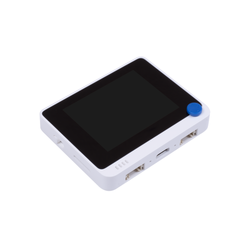
If you want a display, Wi-Fi, Bluetooth, and sensors gathered in a single compact device for your project, the SeeedStudio Wio Terminal is a powerful ARM Cortex-M4 solution.
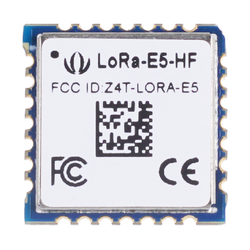
In addition, for long-range, low-power communication projects such as smart agriculture applications, LoRa-E5-based modules offer hardware encryption and fast network connectivity.
3. Industrial Development: Texas Instruments and Zynq SoC
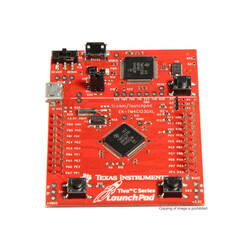
For professional R&D processes, the Texas Instruments LaunchPad series in our category offers engineers advanced capabilities in hardware debugging.
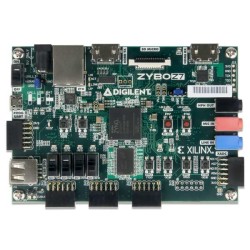
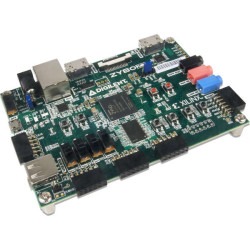
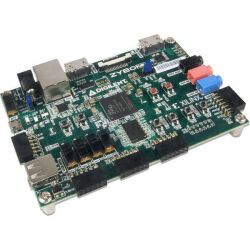
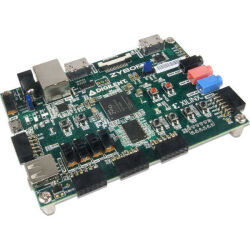
If you need hybrid structures that combine an ARM core with hardware-level parallel processing, you can choose Zynq-7000 series SoC boards that combine ARM architecture on a single chip with FPGA Development Boards.
Quick Comparison Guide Between Models
You can review the table below to choose the right ARM-based development board for your project:
| Hardware Model | Core Architecture | Key UX Feature | Most Suitable Target Audience |
| BBC Micro:bit | ARM Cortex-M0 | Built-in sensors, block coding | Students, educators |
| TI LaunchPad | ARM Cortex-M4F | High stability, professional debugging | Electronics engineers |
| Wio Terminal | ARM Cortex-M4F | Built-in LCD screen, Wi-Fi / Bluetooth | Advanced IoT developers |
| Zynq-7000 Board | Dual-core ARM + FPGA | Both software and hardware acceleration | Advanced R&D specialists |
Robotistan Internal Linking Ecosystem to Expand Your Project
To fully benefit from the high speed of ARM boards, you should connect the right peripherals to them.
For example, if you want to read environmental data while using Wio Terminal or Micro:bit, you can safely add high-precision 3.3V-supported modules from our Sensors / Modules for Arduino category to your project.
If you want to experience ARM architecture through STMicroelectronics' rich industrial ecosystem and focus directly on these processors, you can review the ST/STM ARM Development Board main category on our website.
For users who want to build a foundation in basic electronics and C++ coding logic before moving into the ARM world, the budget-friendly products in our Development Boards Based on Arduino category can be considered as a starting point.
Frequently Asked Questions
What is the advantage of ARM architecture compared to 8-bit boards?
The biggest difference is data processing width and speed. ARM-based 32-bit microcontrollers can process 32-bit data in a single clock cycle, while 8-bit boards need more processing cycles for the same data.
In addition, series such as ARM Cortex-M4 include hardware floating-point units. This structure provides a significant speed advantage in complex tasks such as audio processing and sensor filtering.
Can BBC Micro:bit work with hardware based on Arduino?
They are not directly compatible in terms of physical connection; Micro:bit has a special edge connector at the bottom.
However, with special expansion boards or breakout board products, you can use standard sensors and motor drivers with Micro:bit.
Can I code Texas Instruments LaunchPad with the Arduino IDE?
Yes. Although Texas Instruments boards are professionally programmed with Code Composer Studio, they can also be programmed in C++ like a standard development board through open-source software called Energia.