
 EN
EN


-
{{ CAT. NAME }}
{{ FILTERS.VARIANTS.TYPE1_NAME }}
{{ FILTERS.VARIANTS.TYPE2_NAME }}
Brand
Model
{{ FILTER.NAME }}
Price
FPGA Development Boards and Models
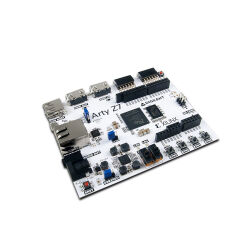
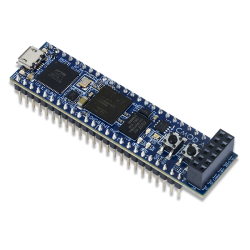
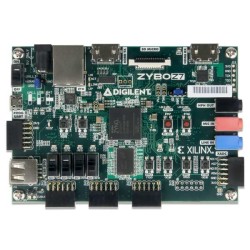
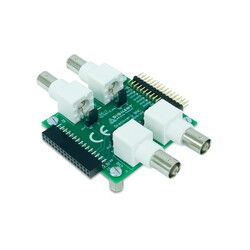
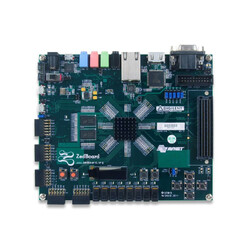
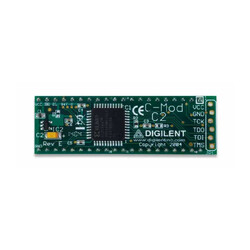
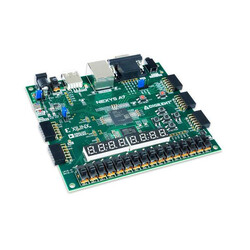
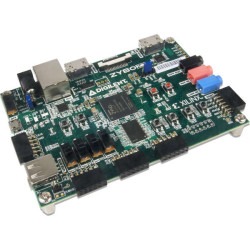
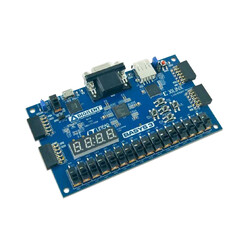
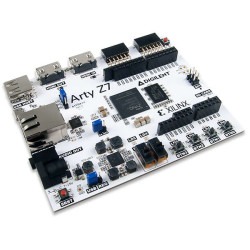
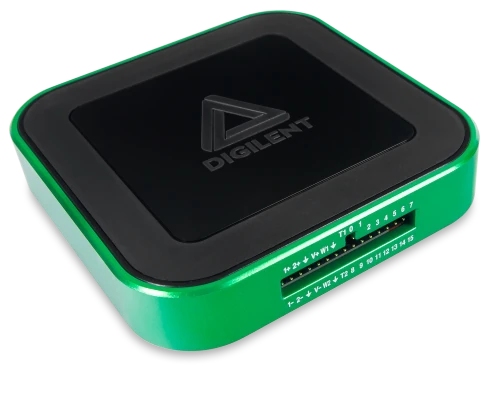
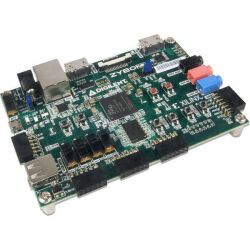
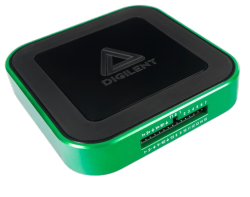
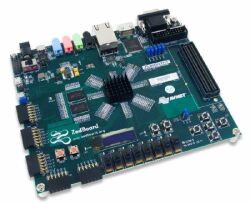
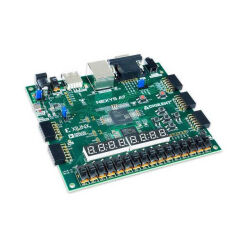
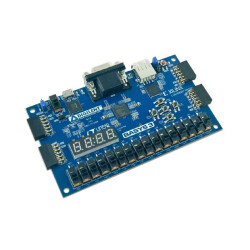
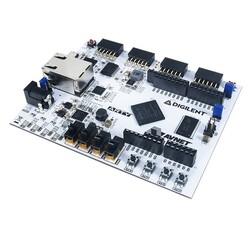
Performance Beyond Limits: FPGA Development Boards
While microcontrollers such as Arduino® and STM32 process code sequentially, FPGA (Field Programmable Gate Array) hardware can convert code directly into hardware architecture and perform millions of operations in parallel. FPGAs do not run software in the traditional sense; instead, they physically reconfigure the logic gates inside the chip according to the code you write.
Thanks to these features, they are used as an industry standard in critical projects where even microseconds matter, such as digital signal processing (DSP), high-speed data acquisition, crypto mining, telecommunications, artificial intelligence (AI) hardware acceleration, aerospace, and defense industries.
Customizability and Flexibility
FPGA development boards open the door to customizable hardware design. FPGA boards give you the power to create unique and original circuits thanks to the programmable logic cells they contain.
You can design hardware that fits your product needs and create original projects.
Understand the Technology
FPGA development boards offer an opportunity to understand and learn the technology, even if you are new to digital design.
You can work on projects at many different difficulty levels, from beginner to advanced, gain experience, and improve your skills.
They also allow experts to prototype and test complex projects.
Easy Connection and Integration
FPGA development boards usually have industry-standard interfaces. With common connection ports such as USB, Ethernet, and HDMI, you can integrate your projects with other systems.
You can also expand the functionality of your projects with boards compatible with various sensors, displays, and external components.
Advanced Technology, Advanced Projects
The FPGA development boards category opens the door to innovative and creative projects for everyone from technology enthusiasts to professional engineers.
These boards provide the power and tools needed to shape the digital world with your own design.
Which FPGA Ecosystem Should You Choose?
The hardware listed on our category page includes architectures from globally recognized main chip manufacturers. According to your project requirements, you can choose from the following series:
1. Education and Hobby: Gowin Tang Nano and Spartan Series
If you are new to the FPGA world and want to learn hardware description languages such as VHDL / Verilog, Tang Nano (Gowin) series boards or educational kits with Spartan-6 chips are good starting points.
Their low budgets and relatively simpler IDE structures make the learning process easier.
2. Advanced and Hybrid Systems: Zynq and Cyclone Series
For advanced image processing or networking projects, you can review the Alinx Xilinx Zynq-7000-based boards in our category.
The Zynq series offers a hybrid SoC structure that combines dual-core ARM Cortex processors and FPGA logic gates on the same chip.
This allows you to leave hardware acceleration to the FPGA and operating system and software management to the ARM core for high efficiency.
In addition, Altera (Intel) Cyclone series boards are powerful alternatives frequently preferred in industrial projects.
FPGA Use Cases and Programming Methods
What is an FPGA? An FPGA is a hardware platform where programmable logic cells and connections can be customized. FPGAs are generally used for digital design and logic operations. There are usually two main approaches to programming FPGAs:
- HDL: Hardware Description Language is used to define hardware structures and functions. The most common HDL types are Verilog and VHDL. Code designed with these languages is converted into physical FPGA structures using synthesis tools.
- System design tools: Some FPGA manufacturers offer system design tools that allow users to create hardware designs using graphical interfaces or high-level tools based on C/C++. This approach can help users with less hardware experience create FPGA designs.
- Digital logic design: FPGAs can be used to perform basic logic operations such as digital logic processes, circuit designs, and calculations.
- Image processing: FPGAs can be used in applications such as real-time image processing, image filters, and image analysis.
- Signal processing: FPGAs can be used with optimized hardware structures for audio processing, radio frequency processing, and other signal processing applications.
- Artificial intelligence and machine learning: FPGAs can be used especially to accelerate deep learning models.
- Industrial automation and control: Customized automation solutions can be created by using FPGA instead of PLC.
- Telecommunications: FPGAs can be used in areas such as data communication, decoding, encryption, and network management.
FPGAs are generally preferred in applications where the design is lower-level and hardware and logic operations need to be optimized.
You may need knowledge of hardware design and programming, but you can develop many different projects for the application areas listed above.
Quick Comparison Guide Between Models
You can compare the highlighted hardware families in our category in the table below to find the model that best fits your needs:
| FPGA Chip Family | Highlighted Models | Use Case and Level | Programming Language |
| Gowin | Tang Nano 4K / 9K | Beginners, budget-friendly logic design | VHDL / Verilog |
| Xilinx Spartan-6 | Mojo v3, Alinx AX301B | Education, intermediate R&D | VHDL / Verilog |
| Altera (Intel) Cyclone IV | Development boards | Industrial control, signal processing | VHDL / Verilog |
| Xilinx Zynq-7000 | Alinx Zynq SoC boards | Advanced image processing, autonomous systems | C/C++ (ARM) + VHDL/Verilog |
Hardware Development with Robotistan Assurance
As you take this major step toward becoming a true hardware engineer, working with the right and original hardware is important.
You can easily access the pinout diagrams and documentation of development boards based on Xilinx, Altera, Lattice, Microsemi, and Gowin from the product pages.
With these boards that operate stably at high frequencies, you can safely produce prototypes for zero-fault-tolerance fields such as telecommunications, medical devices, or aviation.
Frequently Asked Questions
Can I code FPGAs with C or C++ like Arduino?
A standard FPGA chip is not coded directly with languages such as C or C++ because you are designing a physical circuit, not software. Therefore, hardware description languages such as VHDL or Verilog HDL are used. However, on hybrid boards such as the Zynq series, you can program the ARM processor part inside the chip with C/C++ like a standard microcontroller.
Which board should I start with to learn FPGA?
For educational purposes, development boards containing the Xilinx Spartan-6 series or the budget-friendly modern alternative Tang Nano series are generally preferred. These boards have enough capacity to learn basic logic gates and build simple digital clock, counter, or VGA display projects.
Do I need to buy an extra JTAG device to program these boards?
Many modern FPGA development boards in our category, such as the Tang Nano series and most Alinx models, include a built-in programmer circuit. This allows you to connect the board directly to your computer via USB and upload the compiled circuit, called the bitstream file, to the chip. Whether the relevant board requires an external JTAG device is stated in detail in the product description.