
 EN
EN


-
{{ CAT. NAME }}
{{ FILTERS.VARIANTS.TYPE1_NAME }}
{{ FILTERS.VARIANTS.TYPE2_NAME }}
Brand
Model
{{ FILTER.NAME }}
Price
Development Boards and Microcontroller Models
Compare Arduino®, STM32, ESP, FPGA, RISC-V, NVIDIA, and various other microcontroller development boards for your electronics, robotics, IoT, and artificial intelligence projects all on a single page.


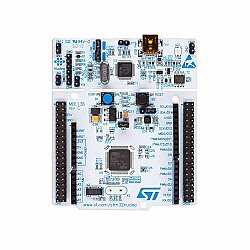
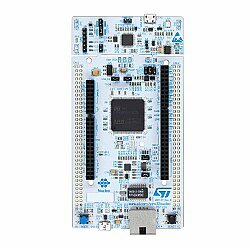
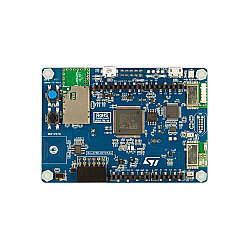
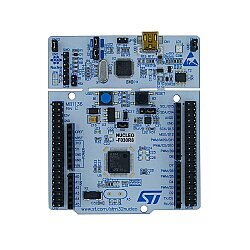
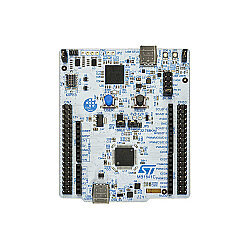
What Is a Development Board?
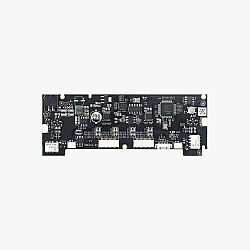
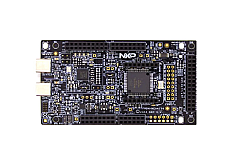
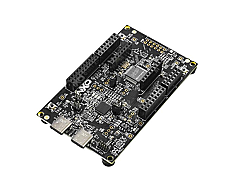
Development boards are programmable boards used to build electronic circuits faster, bring software and hardware together, and turn ideas into working prototypes.
Microcontroller, microprocessor, input/output pins, communication interfaces, power connections, and programming support come together to provide users with a ready-to-use development environment.
Development boards are preferred as the core hardware platform in robotic coding, IoT, automation, sensor applications, motor control, artificial intelligence, image processing, embedded systems, and educational projects.
This makes it possible to develop projects quickly with sensor, display, motor driver, relay, communication module, and different electronic components without designing the circuit from scratch.
Which Is the Best Development Board for Your Project?
When stepping into the world of electronics or developing a complex engineering project, the first thing you need is to choose the right development board that will act as the "brain" of your project.
At Robotistan, we offer a wide range of options under one roof, from open-source hardware to microcontrollers built for industrial standards.
Unlike complex pages that only list technical specifications, we have categorized the boards by usage scenarios so you can find the model that best suits your needs:
For Beginner and Educational Projects
For those who are new to electronics and coding, Arduino®, Development Boards Based on Arduino, Kits Based on Arduino, and basic microcontroller boards offer a practical starting point.
The boards are suitable for LED lighting, sensor reading, motor control, servo use, display connection, and basic robotics projects.
They are frequently preferred in schools, workshops, STEM education, and individual learning processes thanks to their easy setup and broad resource support.
For IoT and Wireless Communication Projects
In smart home, remote data monitoring, wireless sensor network, mobile app-controlled systems, and internet-connected projects, NodeMCU / ESP development boards are a powerful alternative.
Boards with Wi-Fi or Bluetooth support can be used to transfer data from sensors to the cloud, control devices remotely, or develop low-cost IoT prototypes.
For Professional Prototyping and Embedded Systems
STM32, ARM, AVR, PIC, Teensy, and RISC-V development boards can be preferred for projects that require higher processing performance, low power consumption, precise timing, or industrial applications.
These boards provide a flexible hardware infrastructure for automation systems, data acquisition devices, motor control applications, communication systems, and product development processes.
For Artificial Intelligence and High-Performance Applications
NVIDIA development kits and high-performance single-board computers can be considered for image processing, machine learning, autonomous systems, robot vision, and edge AI applications.
These products offer stronger processing capacity compared to classic microcontroller boards, providing advantages in camera, AI model, data processing, and advanced software projects.
Which Development Board Should I Choose? (Comparison Table)
If you cannot decide which hardware is right for you, you can review the quick reference table below:
| Need / Project Type | Recommended Category | Key Feature | Difficulty Level |
| Hobby, Education, Basic Robotics | Boards Based on Arduino | ATmega Chips, 5V Logic | Beginner |
| Smart Home, IoT, Wi-Fi | NodeMCU / ESP Boards | ESP8266 / ESP32, Built-in Wi-Fi | Intermediate |
| Industrial Automation, UAVs | ARM / STM Boards | 32-bit Architecture, High Speed | Advanced |
| AI, Image Processing | NVIDIA / Single-Board Computers | GPU Acceleration, Linux Support | Expert |
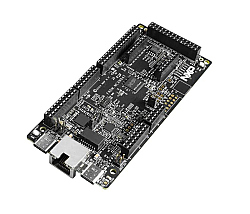
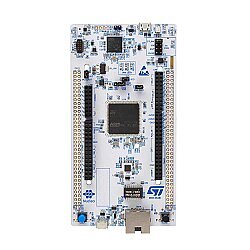
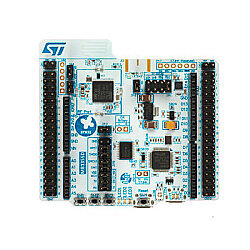
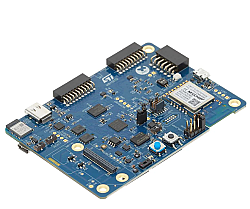
ARM Development Board
ARM development boards are electronic prototyping and product development boards that run on ARM-based microcontrollers or microprocessors.
ARM-based microcontrollers are preferred for many applications due to features such as low power consumption, high processing performance, and fast data processing capabilities.
ARM development boards include many different components and interfaces that can be used in IoT, embedded systems, robotics, artificial intelligence, and many other application areas by leveraging the features provided by ARM-based microcontrollers.
These boards provide many advantages during the development and prototyping process.
For example, they offer benefits such as rapid prototyping, making debugging and testing easier, ensuring compatibility between hardware and software, and saving time.
ARM development boards generally allow users to develop and customize their projects quickly because they are compatible with open-source platforms and programming languages.
What Is an FPGA?
FPGA (Field-Programmable Gate Array) is a type of programmable logic integrated circuit.
With this technology, electronics designers can create their own custom logic circuits by programming a set of logic gates, memory cells, and other components into FPGAs.
FPGAs are used in many different application areas due to their high processing capacity and customizability.
For example, they are used in fields such as video processing, audio processing, network communication, industrial automation, and space research.
What Is NodeMCU?
NodeMCU is a development board based on the ESP8266 Wi-Fi microcontroller. These boards are used for programming and developing IoT (Internet of Things) projects.
NodeMCU boards can be used for many different applications.
For example, they can be used in areas such as collecting data from sensors, remote control, smart home systems, creating a web server, and other IoT applications.
In addition, NodeMCU boards have a Wi-Fi module that can be used to communicate wirelessly with other devices.
NodeMCU boards are ideal for portable projects because they are lightweight and compact.
Thanks to their affordable prices and easy programmability, they have become an option preferred by students, hobbyists, and professionals.
What to Consider When Choosing a Development Board
Price or popularity alone is not enough to choose the right development board.
Criteria such as the number of sensors to be used in the project, motor type, communication needs, power supply, software environment, and physical size should be evaluated together.
For example, while a small-sized board may be preferred for a compact portable project, boards with more input/output pins may be required for a system that needs many sensor and motor connections.
It is important that the operating voltage of the board is compatible with the modules to be used. 3.3V and 5V logic levels may create different connection requirements for some sensors and communication modules.
For this reason, reviewing the technical specifications, pin structure, and compatibility information in the product descriptions before purchasing helps you make the right choice.
Advantages of Buying a Development Board at Robotistan
At Robotistan, the development board category is structured to appeal to a wide range of users, from beginners to professional prototyping.
You can compare different platforms such as Arduino®, boards based on Arduino, STM32, ESP, FPGA, RISC-V, NVIDIA, PIC, Teensy, ARM, and AVR under the same category, and reach the right product for your project’s technical needs more quickly.
The Robotistan ecosystem offers not only products but also guide content that supports the project development process.
Thanks to Arduino projects, robotic coding applications, sensor usage, motor control, and starter kit guides, you can more easily plan which projects you can use the development board you purchase for.
-
Continuous Support: We are always by your side with our technical support team before and after your purchase.
-
Open Source Philosophy: Whether they are original products or high-quality compatible microcontroller models, you can access driver installation guides (e.g., CH340) and sample codes for all hardware from our blog.
-
Fast Solution: Your project does not remain unfinished thanks to the fast shipping advantage.
Frequently Asked Questions
What does a development board do?
A development board is a programmable hardware platform used to control sensors, motors, displays, and other modules in electronic projects.
It is used in prototyping, testing, education, and product development processes.
Which development board should be preferred for beginners?
At the beginner level, UNO R3 development boards based on Arduino and starter kits based on Arduino are frequently preferred.
For more compact projects, boards in the Nano form factor can be considered, while ESP-based boards can be evaluated for wireless projects.
Is a development board the same as a single-board computer?
No. Development boards are generally microcontroller-based and are used for direct hardware control.
Single-board computers, on the other hand, are platforms that can run an operating system and have higher processing power.
Boards similar to Raspberry Pi and NVIDIA development kits can be given as examples of this group.
Which projects are boards based on Arduino used in?
Boards based on Arduino can be used in robotic coding, sensor reading, motor control, automation, smart home, educational kits, basic IoT applications, and maker projects.
Depending on the project, they can be expanded with shields, sensors, relays, displays, and communication modules.
Who are STM32, ESP, FPGA, and RISC-V boards suitable for?
STM32 and ARM-based boards are suitable for embedded systems and professional prototyping projects;
ESP boards are suitable for wireless communication and IoT applications;
FPGA boards are suitable for digital design and hardware-level development work;
RISC-V boards are preferred for open architecture-based experimental and advanced projects.
Which features should be checked when buying a development board?
The processor type, number of pins, operating voltage, memory capacity, programming environment, library support, communication interfaces, size, power consumption, and compatibility with the sensors or modules to be used should definitely be checked.