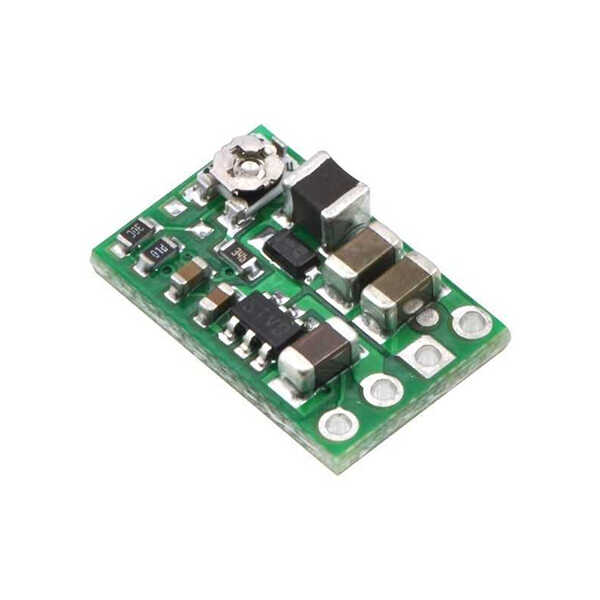
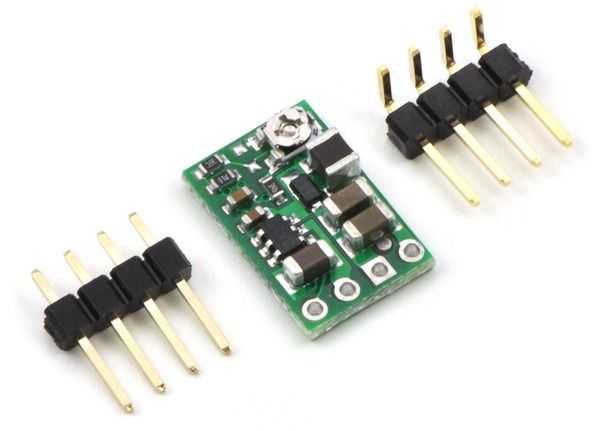
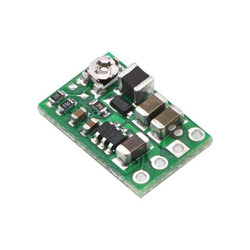
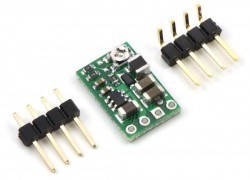
D24V3ALV step-down voltaj regülatörü kartı 4.5V-42V arası bir giriş voltajını, 2.5V-7.5V arasında ayaranabilir bir çıkış voltajına düşüren karttır. Çıkış akımı 300mA'dir. Anahtarlamalı güç kaynağı (switched-mode power supply) ve DC-DC dönüştürücü(converter) olarak da adlandırılabilir.
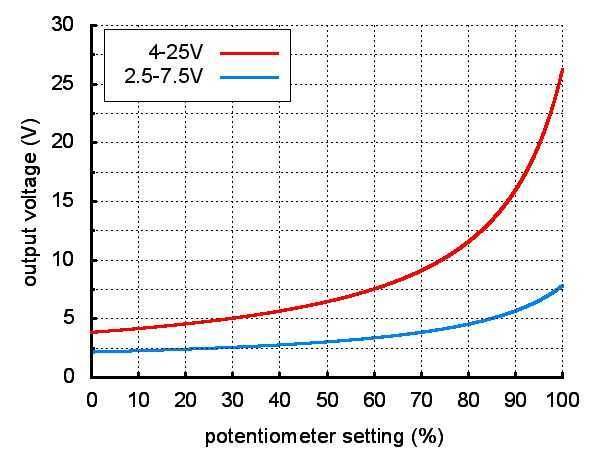
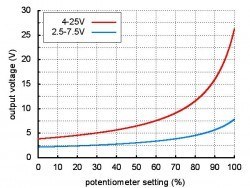
Çıkış voltajı kart üzerindeki potansiyometre yardımıyla ayarlanabilir ve değiştirilebilir. Çıkış voltajı bu kart için giriş voltajından büyük olamaz. Yüksek voltaj, kısa devre ve yüksek ısı koruması kart üzerinde mevcuttur. Ters voltaj koruması yoktur.
Özellikleri :
- Giriş Voltajı : 4.5 V - 42 V
- Çıkış Voltajı : 2.5 V - 7.5 V
- Çıkış Akımı : 300 mA
- Anahtarlama Frekansı : 500 kHz
- Kart boşta 2 mA akım çeker. SHDN pinine 0V verildiği zaman kart pasif duruma geçer ve 20 uA akım çeker.
- Yüksek akım ve yüksek sıcaklık durumunda kart kendini kapatır.
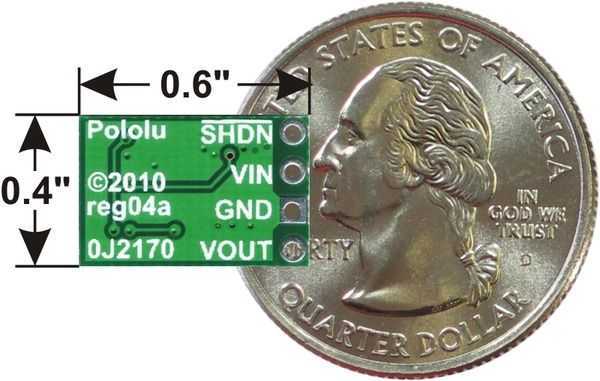
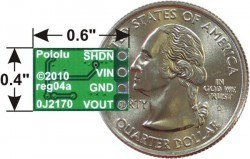
- Boyutları : 15 × 10 × 4 mm
- Ağırlığı : 0.82 g
Kart Pin Bağlantıları :
Kapatma (SHDN), giriş voltajı (Vin), toprak (GND) ve çıkış voltajı (Vout) olmak üzere 4 pini mevcuttur.
SHDN pini kartı kapatıp, düşük güç tüketimi moduna almak için kullanılır. Bu pine 0V verildiğinde kart kendini pasif duruma alacaktır ve voltaj çıkışı gerçekleşmeyecektir. Kartın sürekli olarak çalışmasını istiyorsanız bu pini Vin pinine bağlayabilir veya 2.3V üzerinde bir voltaj uygulayabilirsiniz.
Vin pinini giriş voltajı pinidir. 4.5V-42V arasında bir voltaj değeri verilmedir. Giriş voltajının 42V'un üstünde olmamasına dikkat ediniz.
Vout pinini çıkış voltajı pinidir. Kart üzerindeki potansiyometre yardımıyla ayarlanabilir. 2.5V-7V arasında çıkış alınabilir. Çıkış voltajı bir multimetre ile Vout pininden ölçülebilir. Ancak potansiyemetreyi çevirmek için kullandığınız tornavida ölçüm esnasında problem çıkarabileceğinden, ölçümlerinizi tornavidayı potansiyemetreden çektikten sonra gerçekleştiriniz.
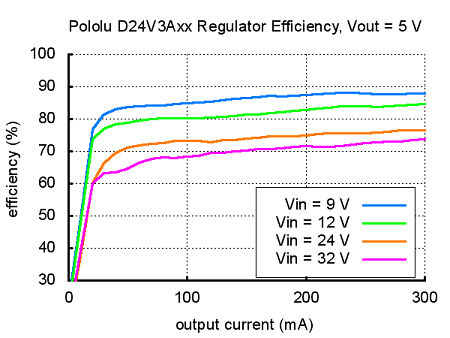
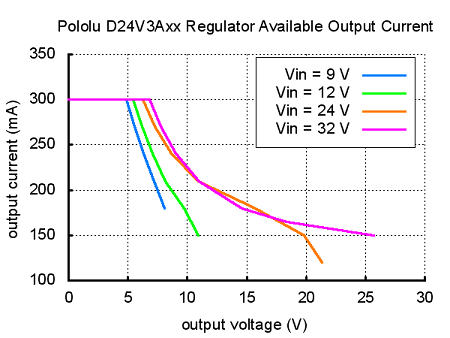
Kart hakkında çeşitli grafikler :

 TR
TR