 EN
EN


Brand
:
ST
Product Code
:
24605
Out Of Stock
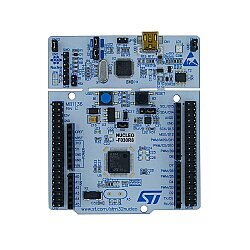
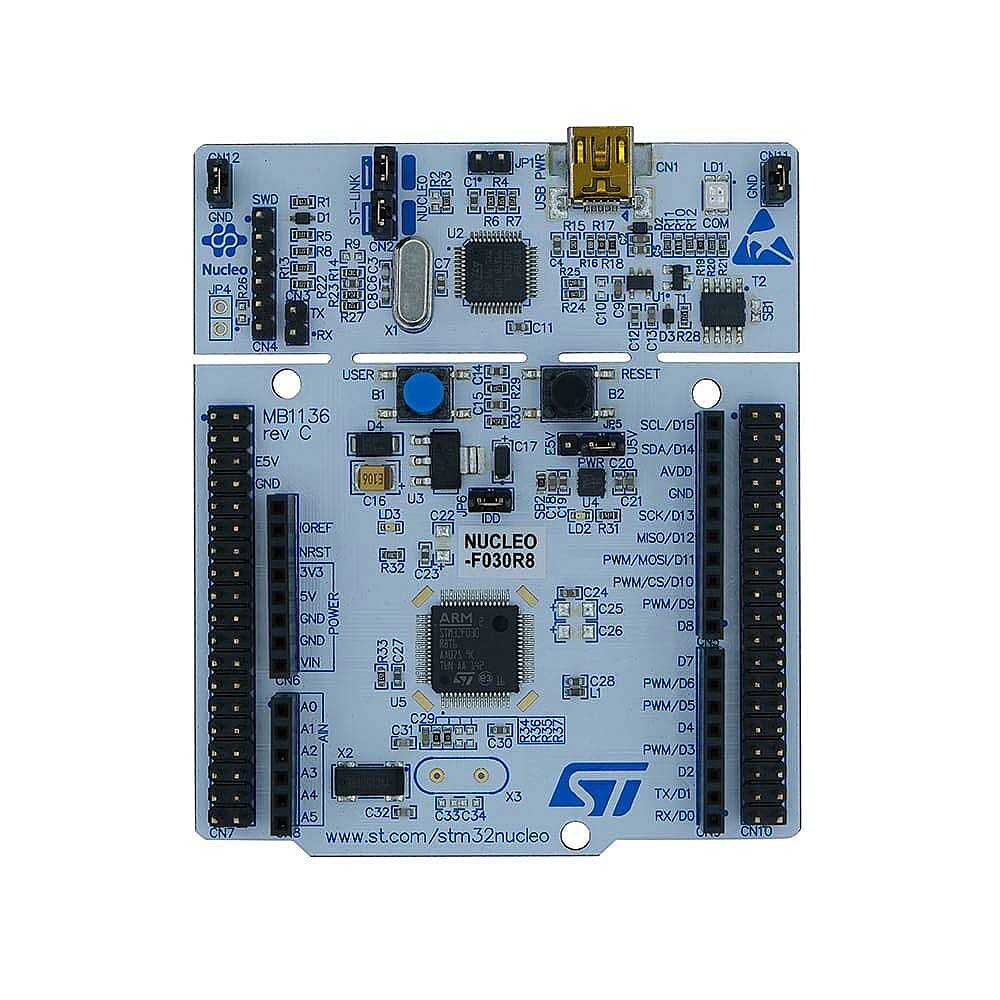
Notify me when its in stockSTM32 Development Board NUCLEO-F030R8
The STM32 Nucleo-64 NUCLEO-F030R8 is an entry-level prototyping board designed for engineers and makers who want to develop cost-effective and flexible projects. Featuring the STM32F030R8 microcontroller with an ARM Cortex-M0 core running at 48 MHz, this kit offers an excellent performance-to-cost ratio for basic control systems, simple sensor readings, and affordable embedded system applications.
Thanks to its advanced hardware structure, it supports Arduino Uno V3 compatible shield boards while providing full access to all MCU I/O pins via the ST morpho multi-pin extension headers. With the integrated ST-LINK/V2-1 programmer and debugger on the board, you can upload your codes and test your system directly via a USB cable without the need for any external module.
| Parameter | Value |
| Microcontroller | STM32F030R8T6 (32-bit) |
| Processor Core | ARM® Cortex®-M0 |
| Clock Speed (Frequency) | 48 MHz (Maximum) |
| Flash Memory | 64 KB |
| SRAM (RAM Memory) | 8 KB (with HW Parity Support) |
| Programmer / Debugger | Integrated ST-LINK/V2-1 |
| Expansion Headers | Arduino™ Uno V3 and ST morpho |
| Operating Voltage Range | 2.4V - 3.6V |
| User Interface | 1x User Button, 1x Reset Button, 1x User LED |