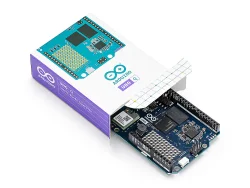
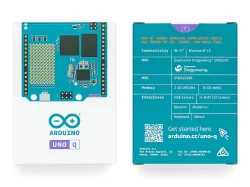
Arduino® UNO™ Q - 4 GB Development Board
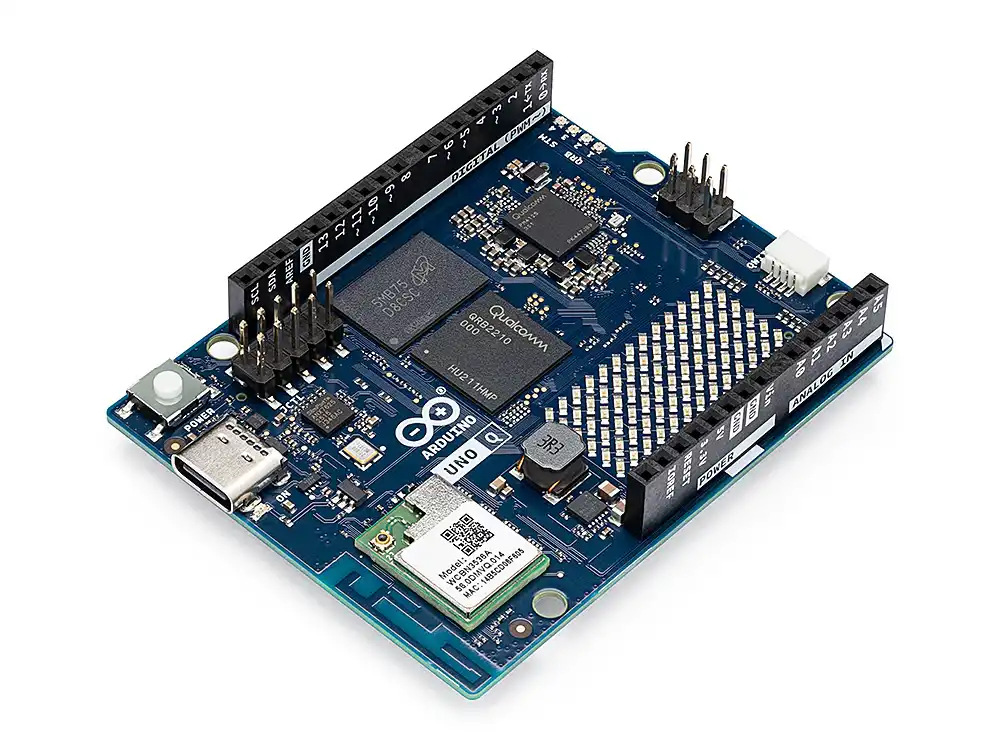
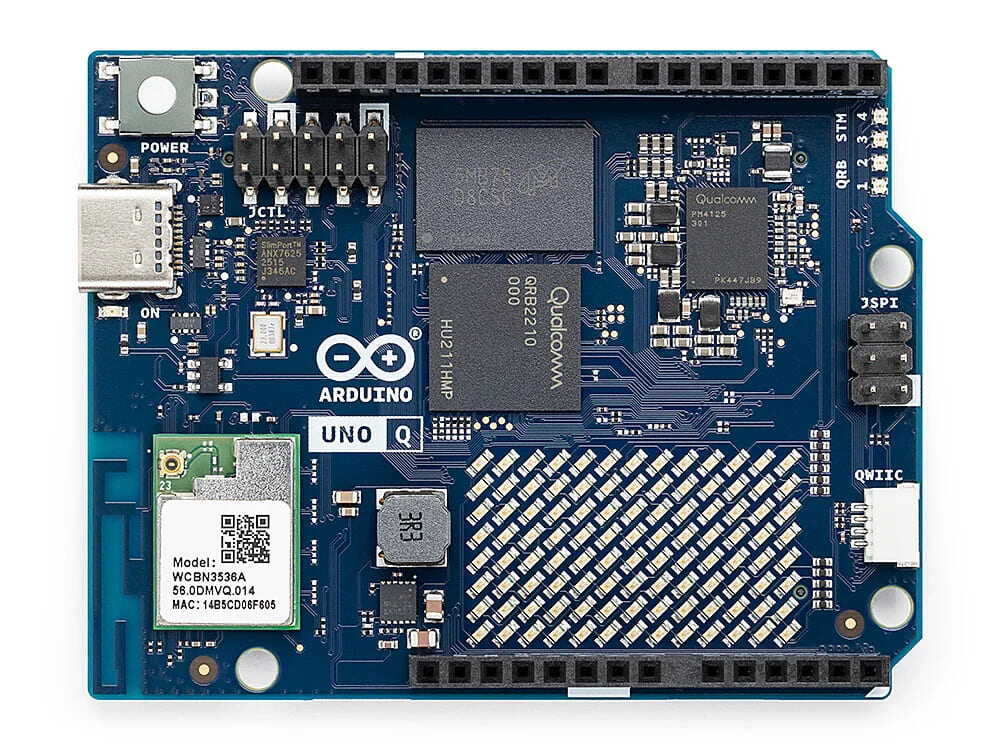
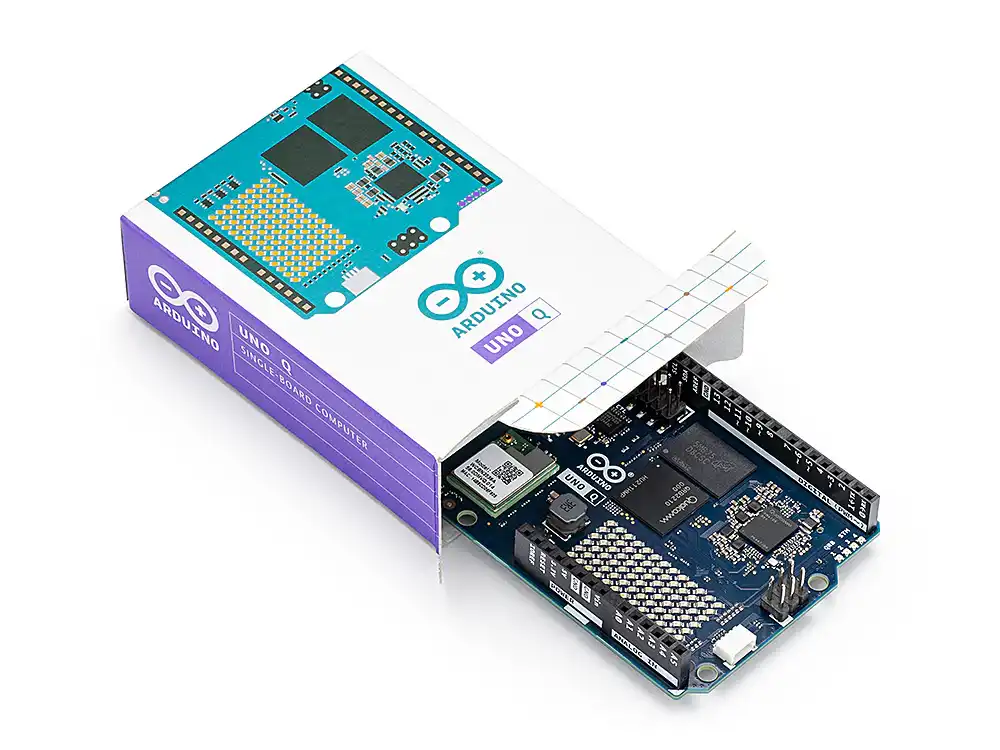
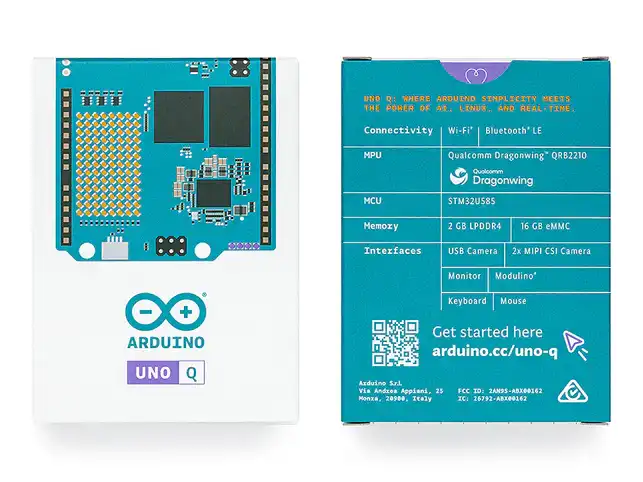
Arduino® UNO™ Q - 4 GB is a hybrid development board that combines the classic UNO form factor with high-capacity hardware. With the Qualcomm® Dragonwing™ QRB2210 microprocessor, you can run high-level applications on Linux® Debian OS, while the STM32U585 microcontroller lets you manage real-time hardware control tasks.
With 4 GB LPDDR4 / LPDDR4X RAM and up to 32 GB eMMC storage, Arduino® UNO™ Q - 4 GB offers a wider working space than the 2 GB model for heavier Linux® workloads, multitasking, Python applications, Docker-based services, advanced edge AI, image processing, and standalone development scenarios.
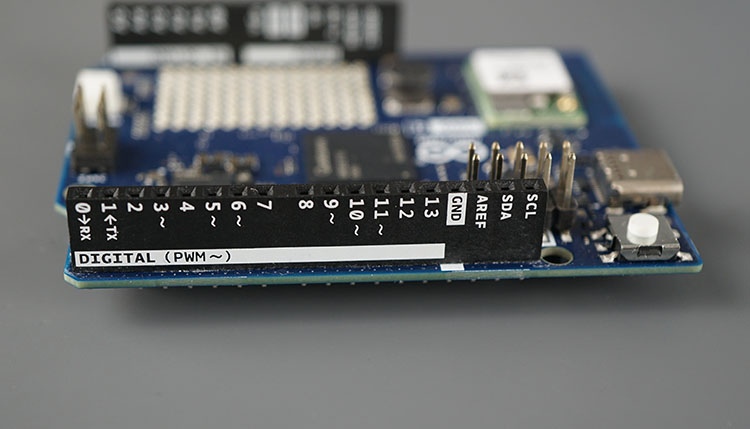
Arduino® UNO™ Q - 4 GB Highlights:
- 4 GB RAM: Offers expanded memory capacity for heavier Linux® workloads, larger Python applications, and multitasking scenarios.
- Qualcomm® Dragonwing™ QRB2210 MPU: Provides a powerful foundation for advanced visual processing and edge AI projects with a quad-core Arm® Cortex®-A53 processor, Adreno GPU, and 2x ISP.
- STM32U585 MCU: Offers a low-latency microcontroller side for real-time motor control, sensor reading, and hardware interactions.
- Linux® + Arduino® Together: Combines the flexibility of the Linux® ecosystem with the familiar Arduino® sketch development workflow on the same board.
- Docker and Docker Compose Support: Enables development of local services, prototype web applications, and container-based workflows.
- Video and Power via USB-C®: The USB-C® port can be used for power, data, host/device role switching, and video output.
- Wi-Fi 5 and Bluetooth® 5.1: Provides a built-in solution for IoT and remote control projects that require wireless connectivity.
- Qwiic and UNO Shield Compatibility: Can be expanded with Modulino® nodes, Qwiic-compatible modules, and the classic UNO ecosystem.

Which Projects Is Arduino® UNO™ Q - 4 GB Suitable For?
Arduino® UNO™ Q - 4 GB is suitable for more intensive development scenarios compared to the 2 GB model. It provides an advantage for users who want to run multiple services at the same time, develop larger Python projects, create edge AI workflows that require more RAM, or use the board as a standalone Linux® development environment with a monitor and keyboard.
- Advanced edge AI and image processing projects
- Local services based on Docker and Docker Compose
- Python, C++, and network applications on Linux®
- Standalone development by connecting a monitor via USB-C®
- Applications that process image, audio, and sensor data simultaneously

Arduino® UNO™ Q - 4 GB Technical Specifications:
- Microprocessor (MPU): Qualcomm® Dragonwing™ QRB2210
- CPU: Quad-core Arm® Cortex®-A53 @ 2.0 GHz
- GPU: Adreno GPU 3D graphics accelerator
- ISP: 2x ISP, 13 MP + 13 MP or 25 MP @ 30 fps
- Microcontroller (MCU): STM32U585
- MCU Core: Arm® Cortex®-M33, up to 160 MHz
- MCU Memory: 2 MB Flash, 786 KB SRAM
- RAM: 4 GB LPDDR4 / LPDDR4X
- Storage: Up to 32 GB eMMC
- Wireless Connectivity: Wi-Fi 5, 2.4/5 GHz and Bluetooth® 5.1
- USB: 1x USB-C®, host/device role switching, power and video output
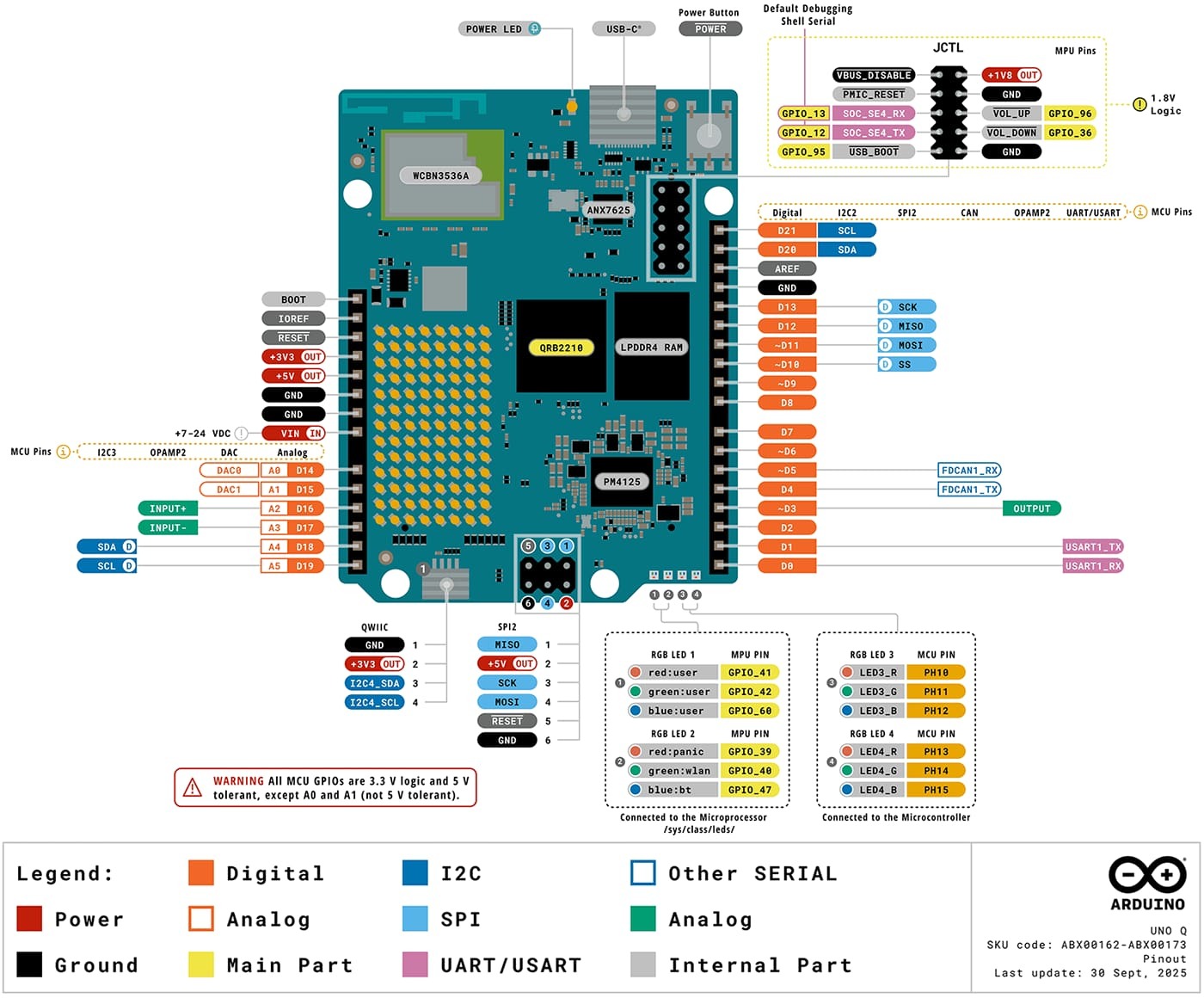
- Interfaces: I2C/I3C, SPI, PWM, CAN, UART, PSSI, GPIO, JTAG, ADC
- Qwiic Connection: Solderless expansion with Modulino® nodes and compatible modules
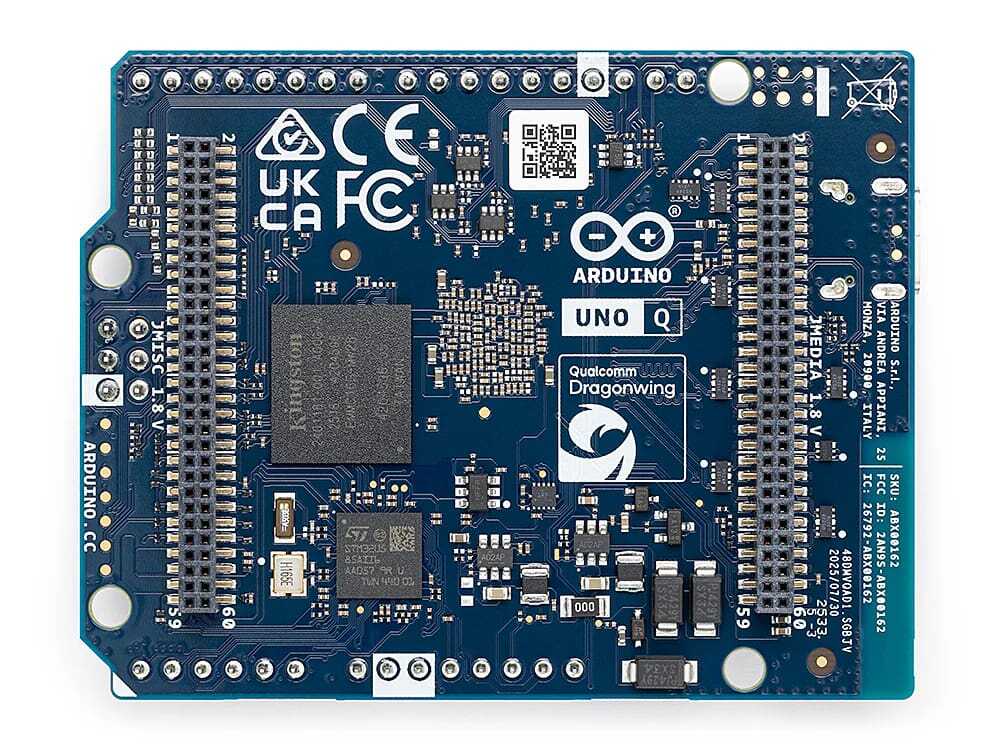
- Video: Video output via USB-C®, MIPI DSI pins on JMEDIA header
- Audio: Microphone input, headphone output, and line out support
- Operating System: Linux® Debian OS
- Real-Time Operating System: Arduino Core on Zephyr OS
- Container Support: Docker and Docker Compose
- Additional Hardware: 8x13 blue LED matrix, 4x RGB LED, 1x Qwiic connector
- Dimensions: 68.85 mm x 53.34 mm, UNO form factor
Arduino® App Lab Supported Operating Systems:
- Windows 10 or later, 64-bit
- macOS 11 or later, 64-bit
- Ubuntu 22.04 and Debian Trixie, 64-bit

2 GB or 4 GB? Which Model Should You Choose?
Thanks to its higher memory capacity, Arduino® UNO™ Q - 4 GB offers a more flexible workspace for heavier Linux® workloads, more background processes, larger Python applications, and more advanced AI scenarios. While the 2 GB version may be sufficient for more economical and lightweight projects, the 4 GB model is more advantageous for users who want a smoother multitasking experience and broader development flexibility.
Frequently Asked Questions:
- What is Arduino® UNO™ Q - 4 GB? It is a hybrid Arduino® development board that combines the Qualcomm® Dragonwing™ QRB2210 microprocessor capable of running Linux® and the real-time STM32U585 microcontroller on a single board.
- For which workloads does the 4 GB model provide an advantage? It provides an advantage in multitasking, large Python applications, Docker-based services, image/audio processing, and edge AI projects that require more memory.
- Can it be used with Arduino® IDE? Yes. It offers a development experience compatible with Arduino® IDE, Arduino® Cloud, and Arduino® App Lab.
- Can development be done with Python? Yes. Python scripts can be run on Linux® Debian OS; sketch, Python, and AI components can also be used together within App Lab.
- Does it support Wi-Fi and Bluetooth®? Yes. The board includes dual-band Wi-Fi 5 and Bluetooth® 5.1.
- When should UNO™ Q be preferred instead of UNO R4? UNO R4 is suitable for classic microcontroller projects. UNO™ Q - 4 GB stands out in projects that require Linux®-based development, AI, image/audio processing, Docker, and multitasking.
Similar Products:

 EN
EN