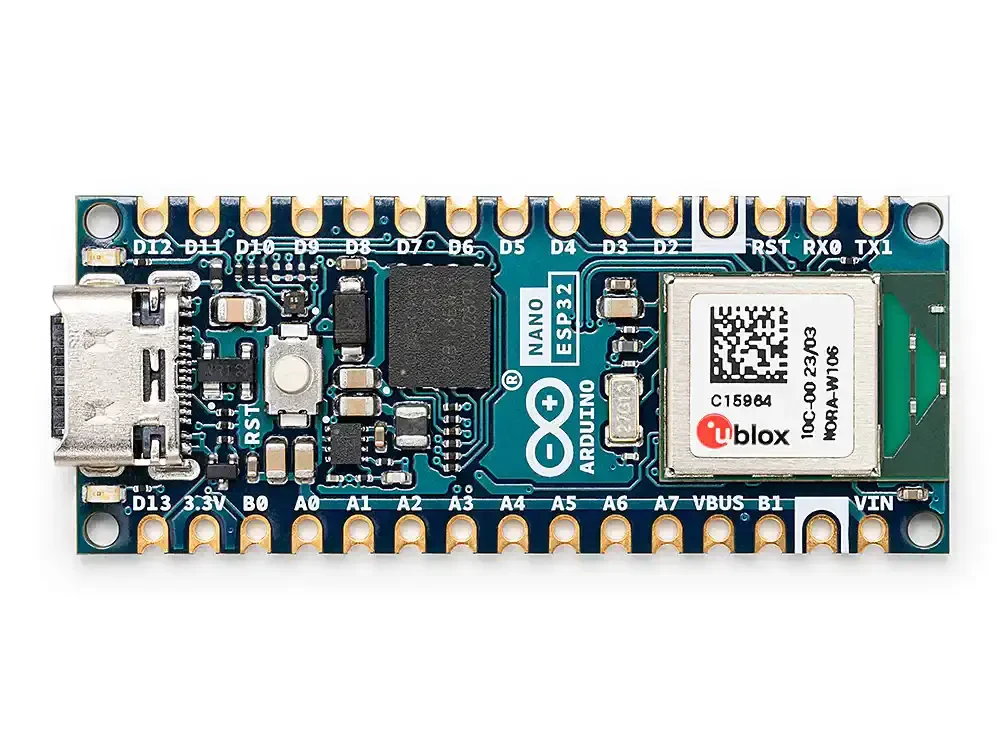
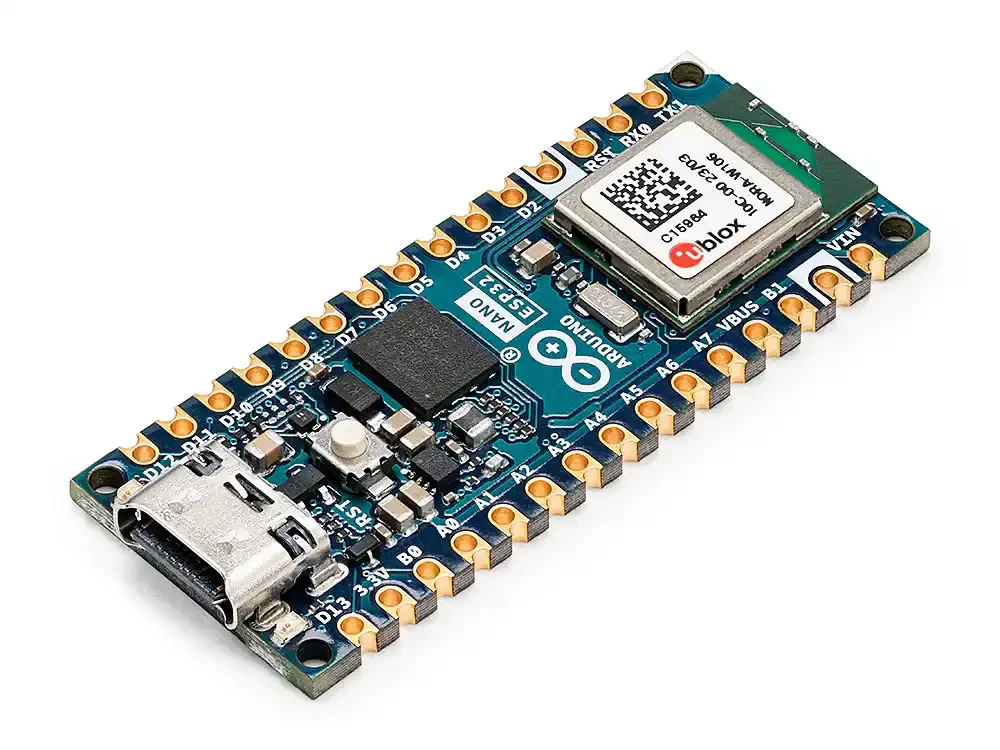
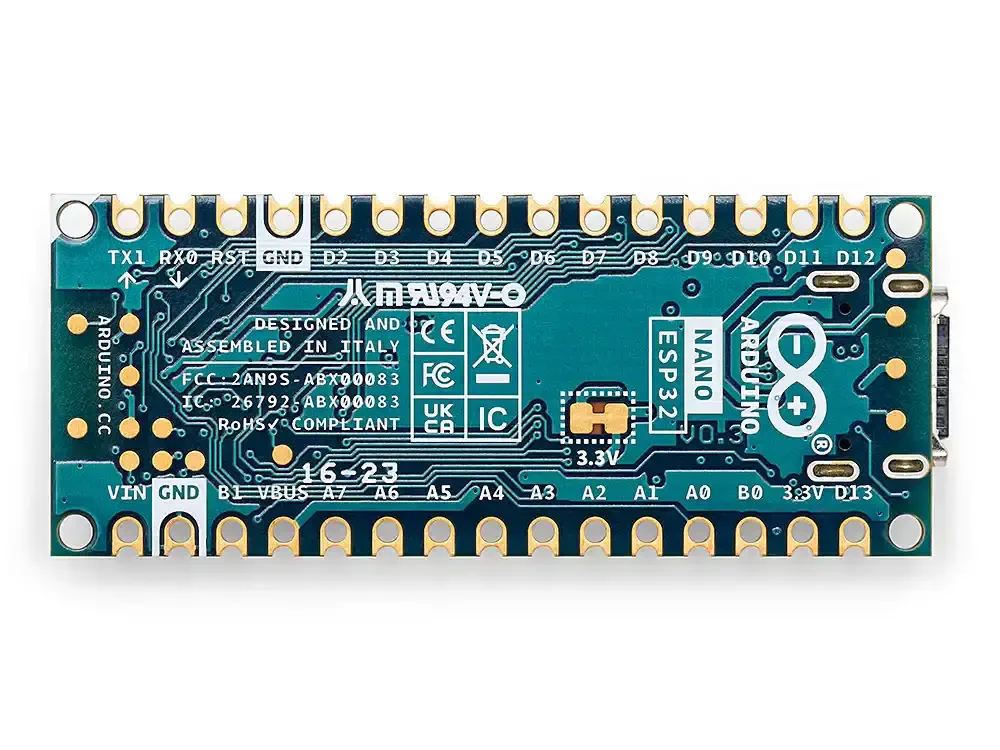
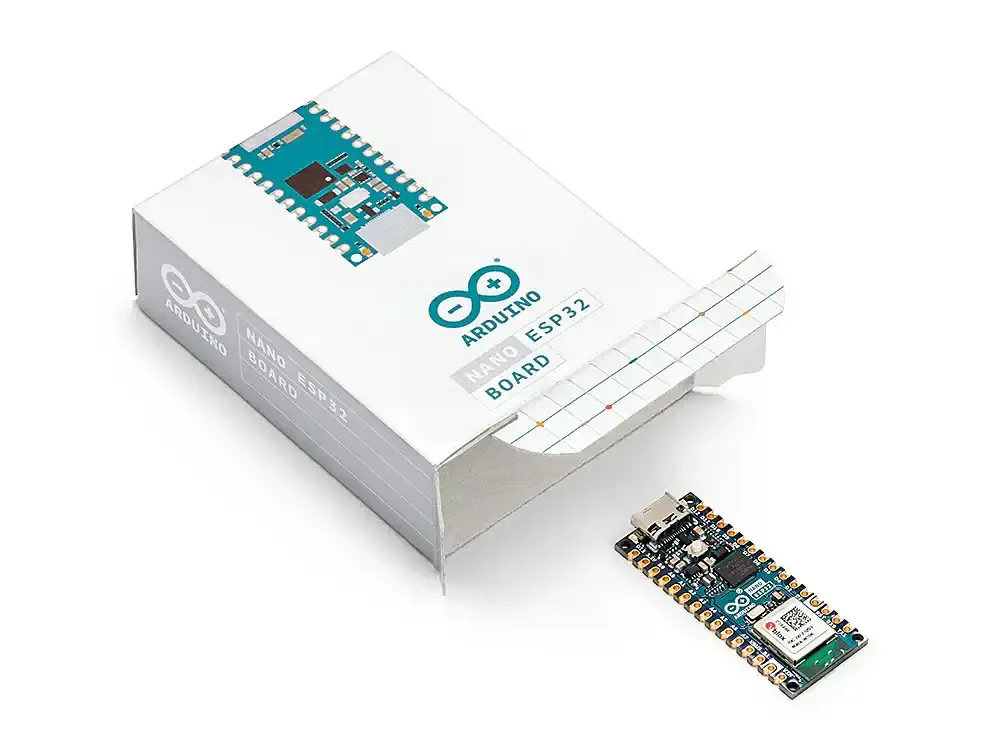
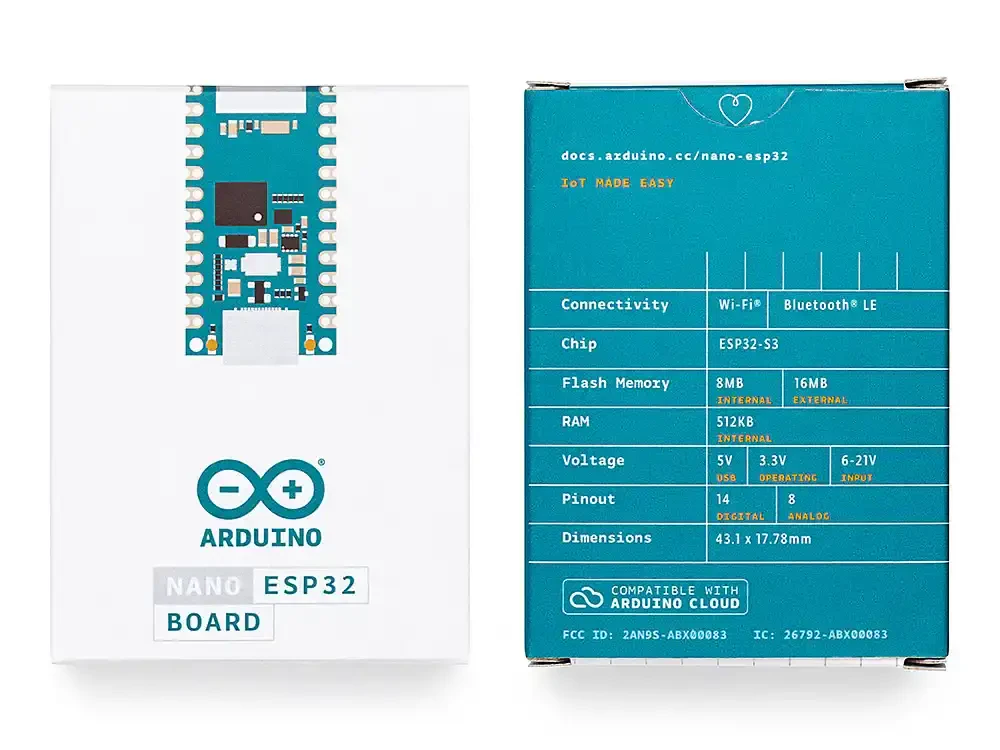
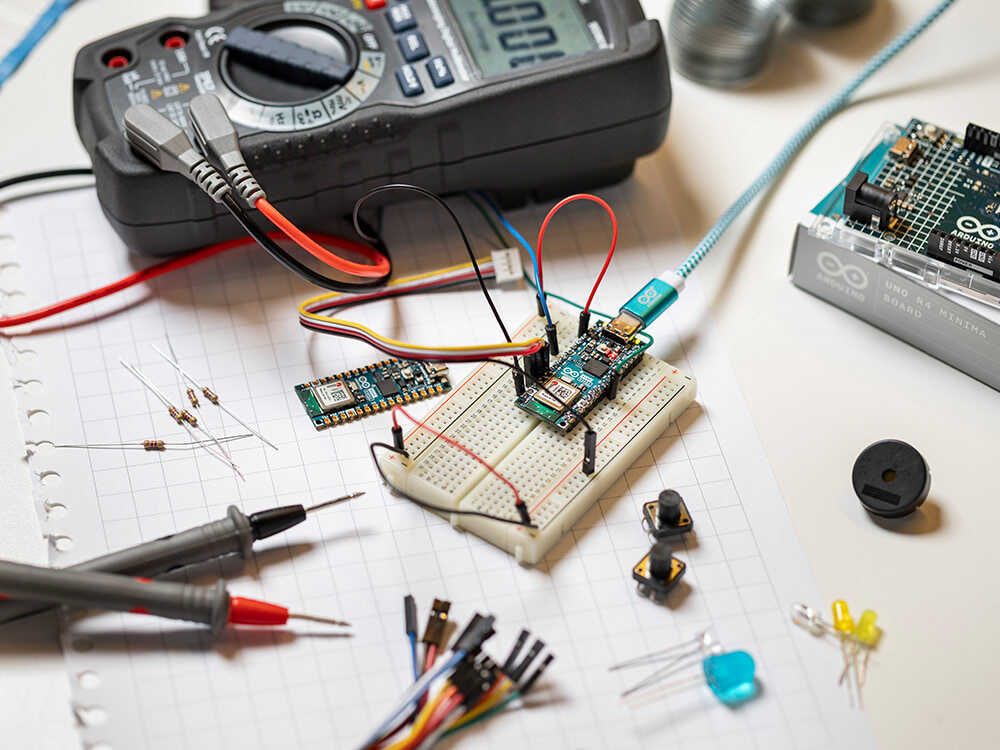
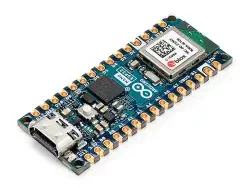
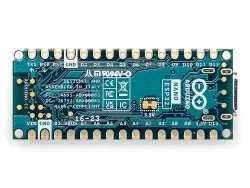
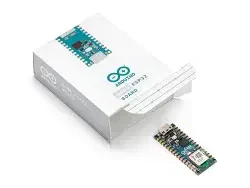
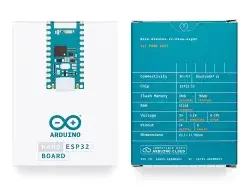
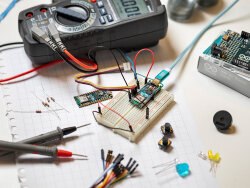
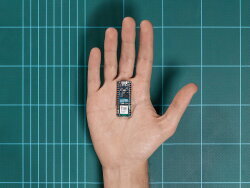
Arduino® Nano ESP32 is a compact microcontroller board that combines the Arduino® Nano form factor with a powerful ESP32-S3-based wireless development platform. Built around the u-blox® NORA-W106 module, this board offers a flexible solution for IoT projects with Wi-Fi® and Bluetooth® Low Energy connectivity, USB-C® port, MicroPython support, and Arduino® Cloud compatibility.
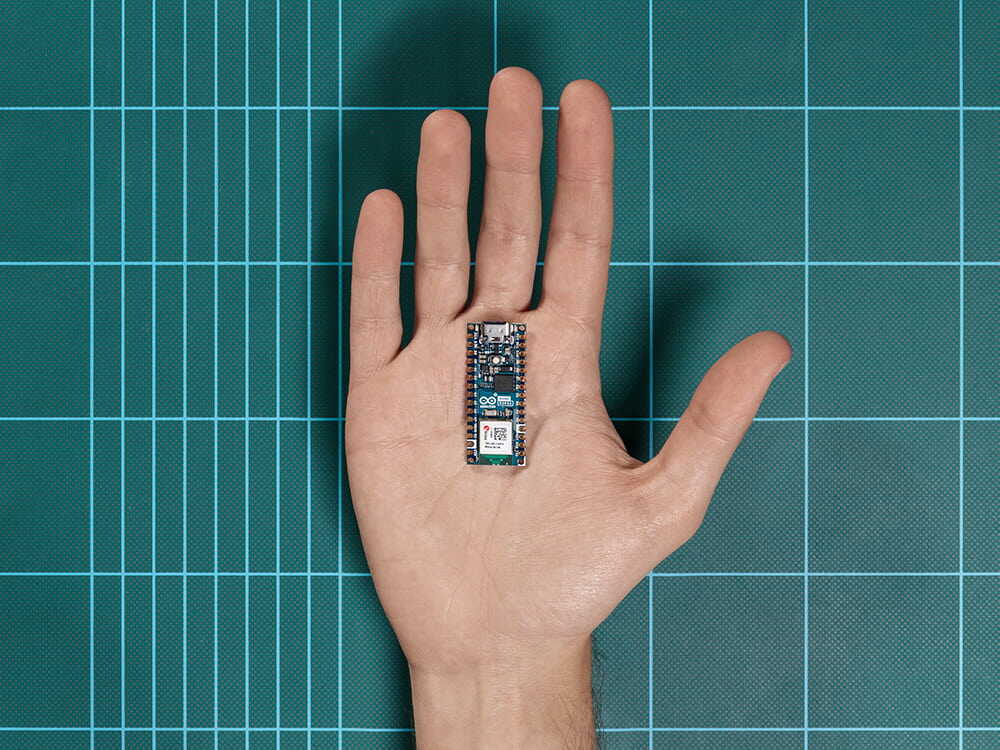
Preserving the Nano form factor, Arduino® Nano ESP32 can be easily used in space-constrained projects. Thanks to its compatibility with existing Nano accessories, easy integration with the Arduino® ecosystem, and the wireless connectivity options offered by the ESP32 world, it is a powerful development board for both beginner-level users and advanced developers.
Arduino® Nano ESP32 can be used in IoT, data acquisition, wireless control, smart device, sensor network, and MicroPython projects with its ESP32-S3 processor architecture, which has a clock speed of up to 240 MHz. Its 16 MB external Flash, 512 kB SRAM, 384 kB ROM, and 8 MB RAM capacity in the NORA-W106-10B module provide a powerful hardware infrastructure for more advanced applications.
Thanks to Arduino® IDE, Arduino® Cloud Editor, and MicroPython support, it adapts to different development habits. With HID support, the board can be used in projects that behave like a mouse or keyboard when connected to a computer. Thanks to its compatibility with the ESP32 ecosystem, you can benefit from connectivity features such as Wi-Fi®, Bluetooth® LE, and ESP-NOW.
Arduino® Nano ESP32 Highlights:
ESP32-S3-Based Structure: Offers powerful processing performance and wireless connectivity with the ESP32-S3 system inside the u-blox® NORA-W106 module.
Wi-Fi® and Bluetooth® LE Support: Suitable for IoT projects, wireless data transfer, and low-energy connectivity applications.
USB-C® Connection: Provides power, programming, and serial communication support through the modern USB-C® port.
MicroPython Support: Offers the ability to develop projects with MicroPython in addition to the Arduino® development environment.
Arduino® Cloud Compatibility: Can be used with Arduino® Cloud to create cloud-based IoT projects and remotely manage devices.
HID Support: Can be used in human interface device projects such as mouse and keyboard emulation.
Compact Nano Form Factor: Can be easily integrated into small spaces with its 18 mm x 45 mm dimensions.
Arduino® Nano ESP32 Technical Specifications:
Board Name: Arduino® Nano ESP32
SKU: ABX00083 / ABX00092
Microcontroller: u-blox® NORA-W106, ESP32-S3
Processor: 32-bit Xtensa® LX7, up to 240 MHz
USB: USB-C® programming port
Digital I/O Pins: 14
Analog Input Pins: 8
PWM Pins: 5
External Interrupts: All digital pins
Built-in LED Pin: 13
Built-in RGB LED Pins: 14-16
UART: 2x
I2C: 1x, A4 (SDA) and A5 (SCL)
SPI: D11 (COPI), D12 (CIPO), D13 (SCK), Chip Select (CS) for any GPIO
Connectivity: Wi-Fi® and Bluetooth® LE
ESP-NOW: Supported
Circuit Operating Voltage: 3.3V
Input Voltage (VIN): 6-21V
Source Current per I/O Pin: 40 mA
Sink Current per I/O Pin: 28 mA
ROM: 384 kB
SRAM: 512 kB
External Flash: 16 MB (128 Mbit)
RAM: 8 MB (NORA-W106-10B)
Dimensions: 18 mm x 45 mm
Certifications: CE, FCC, RoHS, REACH, WEEE, UKCA, RCM, ISED/IC, MIC
Arduino® Nano ESP32 Power:
Arduino® Nano ESP32 can be powered through the USB-C® port or VIN pin. The operating voltage of the board is 3.3V. An input voltage between 6-21V can be applied through the VIN pin. The USB-C® port is used for 5V power, programming, and serial communication.
USB-C®: Used for 5V power, programming, and serial communication.
VIN: Can be used for external power input in the 6-21V range.
Circuit Operating Voltage: 3.3V
Source Current per I/O Pin: 40 mA
Sink Current per I/O Pin: 28 mA
Arduino® Nano ESP32 Memory:
Nano ESP32 has 384 kB ROM, 512 kB SRAM, and 16 MB external Flash memory. The 8 MB RAM on the NORA-W106-10B module provides a powerful memory infrastructure for more advanced applications and MicroPython projects.
Arduino® Nano ESP32 Input and Output:
The board has 14 digital I/O pins and 8 analog input pins. The 5 PWM pins can be used in applications such as LED brightness control, motor driving, and similar tasks. All digital pins provide external interrupt support. There is also a built-in LED connected to pin 13 and a built-in RGB LED associated with pins 14-16.
Digital I/O: 14 pins
Analog Input: 8 pins
PWM: 5 pins
External Interrupt: All digital pins
Arduino® Nano ESP32 Communication:
Arduino® Nano ESP32 offers Wi-Fi®, Bluetooth® LE, UART, I2C, and SPI communication options. In addition, low-latency wireless communication projects can be developed with the ESP-NOW protocol in the ESP32 ecosystem.
Wi-Fi®: u-blox® NORA-W106 (ESP32-S3)
Bluetooth® LE: u-blox® NORA-W106 (ESP32-S3)
UART: 2x
I2C: A4 (SDA), A5 (SCL)
SPI: D11 (COPI), D12 (CIPO), D13 (SCK)
ESP-NOW: Supported
Arduino® Nano ESP32 Programming:
Arduino® Nano ESP32 can be programmed with Arduino® IDE, Arduino® Cloud Editor, and MicroPython. Code can be uploaded through the USB-C® connection, serial communication can be performed, and debugging support can be used without additional hardware. Thanks to HID support, the board can also be used in projects that behave like a mouse or keyboard when connected to a computer.
Arduino® Nano ESP32 Frequently Asked Questions:
Is Arduino® Nano ESP32 compatible with MicroPython? Yes, Arduino® Nano ESP32 offers MicroPython support and is a powerful starter board for users who want to learn MicroPython.
Can hardware compatible with Arduino® Nano be used with Arduino® Nano ESP32? The Nano form factor has been preserved. However, since the board operates with a 3.3V logic level, level compatibility should be checked for modules using 5V logic.
Can sketches developed for Arduino® Nano be used on Nano ESP32? Many sketches developed using the Arduino® API can be adapted. However, changes may be required in code containing AVR architecture-specific registers or low-level commands.
Is Arduino® Nano ESP32 compatible with other ESP32 boards? Yes, it is compatible with the ESP32 ecosystem. However, pin mappings and board configurations should be checked according to the project.

 EN
EN